
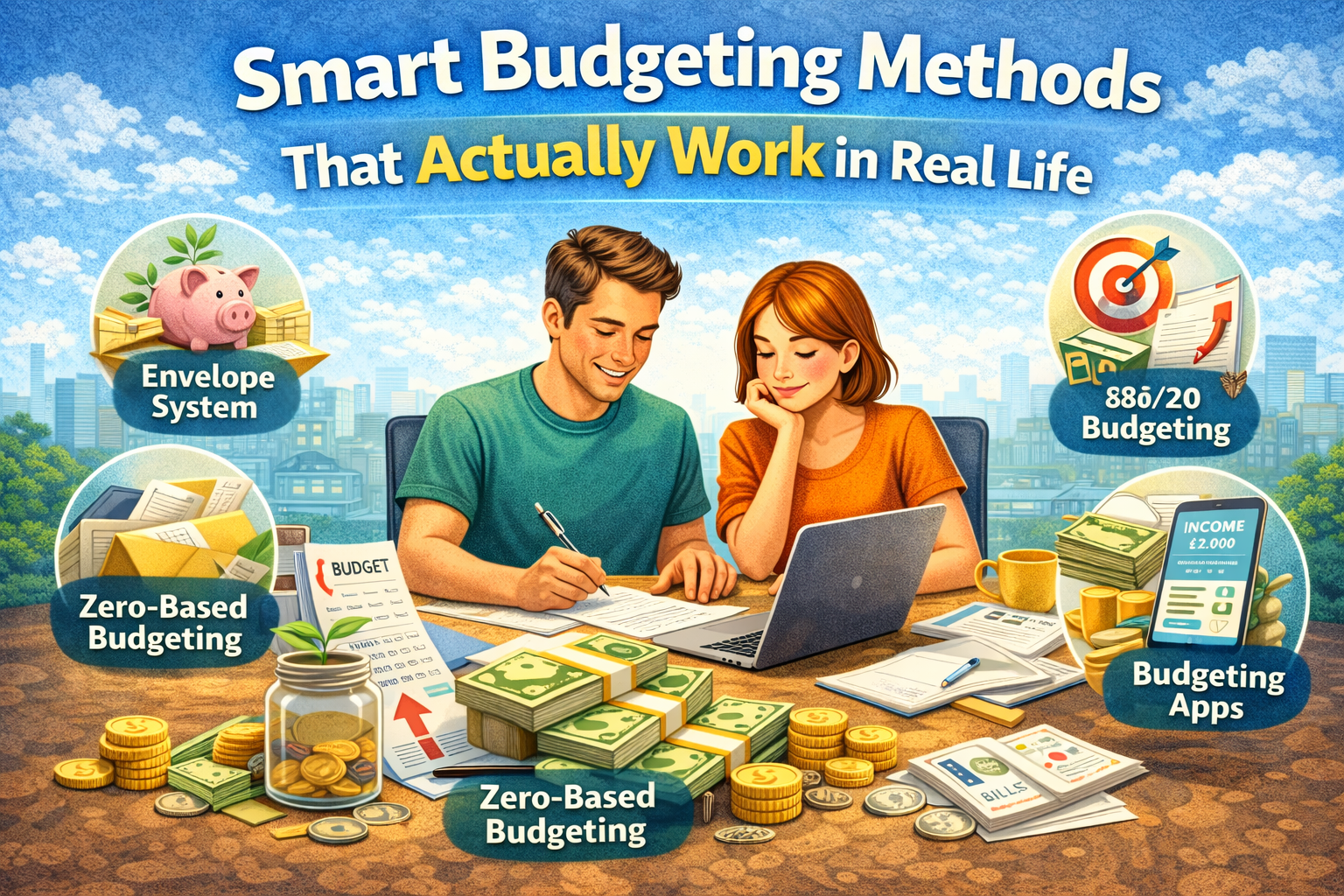
Smart Budgeting Methods That Actually Work in Real Life
Introduction
Let’s be honest.
Most budgeting advice sounds good on paper — but doesn’t work in real life.
You download a budgeting template.
You try tracking every rupee or dollar.
You promise yourself this month will be different.
And then…
Life happens.
Unexpected expenses.
Family events.
Online shopping.
Medical bills.
Emotions.
That’s why today I want to share something practical — smart budgeting methods that actually work in real life, not just in theory.
In my opinion, budgeting is not about restricting yourself. It’s about controlling your money so it doesn’t control you.
If you’re tired of starting over every month, this guide will change how you manage money forever.
Why Most Budgets Fail
Before we talk about smart budgeting methods that actually work in real life, let’s understand why most people fail.
-
Budgets are too strict
-
They don’t include fun spending
-
They ignore irregular expenses
-
They rely on motivation instead of systems
-
People track expenses but don’t change behavior
In my experience, budgeting fails when it feels like punishment.
A smart budget must feel sustainable.
1. The 50/30/20 Rule (Simple & Realistic)
One of the smartest budgeting methods that actually work in real life is the 50/30/20 rule.
Here’s how it works:
-
50% → Needs (rent, bills, groceries)
-
30% → Wants (entertainment, eating out, shopping)
-
20% → Savings & investments
Why it works:
-
It’s simple.
-
It allows enjoyment.
-
It forces savings.
In my opinion, this rule works because it balances discipline with freedom.
You’re not cutting everything.
You’re managing everything.
2. Pay Yourself First (Powerful Wealth Builder)
This is one of my favorite smart budgeting methods that actually work in real life.
Before paying bills.
Before shopping.
Before spending.
You save first.
Example:
The day your salary arrives, automatically transfer:
-
10–20% into savings
-
Or into investments
This method works because:
You remove temptation.
You don’t save what’s left.
You spend what’s left.
Big difference.
3. Zero-Based Budgeting (Every Dollar Has a Job)
This method means:
Income – Expenses = 0
Not because you spend everything…
But because every rupee/dollar is assigned a purpose.
For example:
-
Rent
-
Groceries
-
Utilities
-
Savings
-
Emergency fund
-
Investments
-
Fun
Nothing is unplanned.
This is one of the most smart budgeting methods that actually work in real life if you like structure.
In my opinion, this method is powerful for people who overspend unconsciously.
4. The Cash Envelope System (For Overspenders)
If you struggle with card spending, this method is magic.
You withdraw cash and divide it into envelopes:
-
Grocery envelope
-
Fuel envelope
-
Entertainment envelope
When the envelope is empty, spending stops.
Why this works:
Physical money hurts more to spend.
In real life, psychology matters more than math.
5. The 24-Hour Rule (Impulse Control)
Not every budgeting method is about numbers.
Some are about behavior.
The 24-hour rule means:
If you want to buy something non-essential, wait 24 hours.
Most impulse purchases disappear.
This is one of the simplest smart budgeting methods that actually work in real life.
In my personal experience, this rule alone can reduce unnecessary spending by 30–40%.
6. Track Weekly, Not Daily
Many people quit budgeting because daily tracking feels exhausting.
Instead:
Review expenses weekly.
Weekly check-ins:
-
Keep awareness
-
Reduce stress
-
Improve control
Budgeting should feel manageable, not overwhelming.
7. Build a “Fun Fund”
One mistake people make is removing enjoyment.
Smart budgeting methods that actually work in real life always include fun.
Create a small monthly fun fund:
-
Movies
-
Eating out
-
Shopping
-
Trips
When fun is planned, guilt disappears.
8. Plan for Irregular Expenses
Real life includes:
-
Weddings
-
Repairs
-
Gifts
-
Annual subscriptions
-
School fees
Divide these annual costs by 12 and save monthly.
This is what separates theoretical budgets from real-life budgets.
9. Automate Everything
Automation is underrated.
Set automatic:
-
Savings transfers
-
Investment contributions
-
Bill payments
Smart budgeting methods that actually work in real life rely on systems, not willpower.
In my opinion, discipline is easier when decisions are automated.
10. Increase Savings Rate With Income Growth
When income increases:
Don’t increase lifestyle immediately.
Instead:
Increase savings rate first.
Example:
If salary increases by 10%, increase savings by at least 5%.
This prevents lifestyle inflation.
The Emotional Side of Budgeting
Here is something very important.
Budgeting is emotional.
People don’t overspend because they are bad at math.
They overspend because of:
-
Stress
-
Comparison
-
Social pressure
-
Reward mentality
In my opinion, smart budgeting methods that actually work in real life must consider emotions.
Money management is 80% behavior, 20% numbers.
Common Budgeting Mistakes
Let’s quickly address mistakes:
❌ Setting unrealistic savings goals
❌ Ignoring small expenses
❌ Forgetting irregular costs
❌ Not reviewing budget
❌ Comparing your progress to others
Budgeting is personal.
Your income.
Your goals.
Your lifestyle.

How to Start Today (Simple Action Plan)
If you feel overwhelmed, do this:
Step 1: Calculate monthly income
Step 2: List fixed expenses
Step 3: Choose one budgeting method
Step 4: Automate savings
Step 5: Review weekly
Start simple.
Improve gradually.
My Personal Opinion on Budgeting
In my opinion, budgeting changed my financial mindset completely.
Before budgeting:
Money disappeared.
After budgeting:
Money had direction.
I realized something powerful:
You don’t need a high income to feel financially secure.
You need control.
Smart budgeting methods that actually work in real life are not complicated.
They are consistent.
Even average earners can build wealth with smart budgeting.
Conclusion
Smart budgeting methods that actually work in real life are:
-
Simple
-
Flexible
-
Realistic
-
Automated
-
Emotion-aware
Budgeting is not about restriction.
It is about freedom.
When you control your money:
-
Stress decreases
-
Savings increase
-
Confidence grows
-
Wealth builds slowly but surely
The goal is not perfection.
The goal is progress.
Start today.
Even small changes matter.
Frequently Asked Questions (FAQs)
1. What is the best budgeting method for beginners?
The 50/30/20 rule is simple and beginner-friendly. It balances needs, wants, and savings easily.
2. Why do budgets fail?
Budgets fail when they are too strict, unrealistic, or ignore real-life expenses.
3. How much should I save monthly?
Ideally 20%, but even 10% is a good start if income is tight.
4. Is budgeting necessary if I earn well?
Yes. Even high earners can stay broke without proper budgeting.
5. How can I stay consistent with budgeting?
Automate savings, review weekly, and allow some fun spending to avoid burnout.