
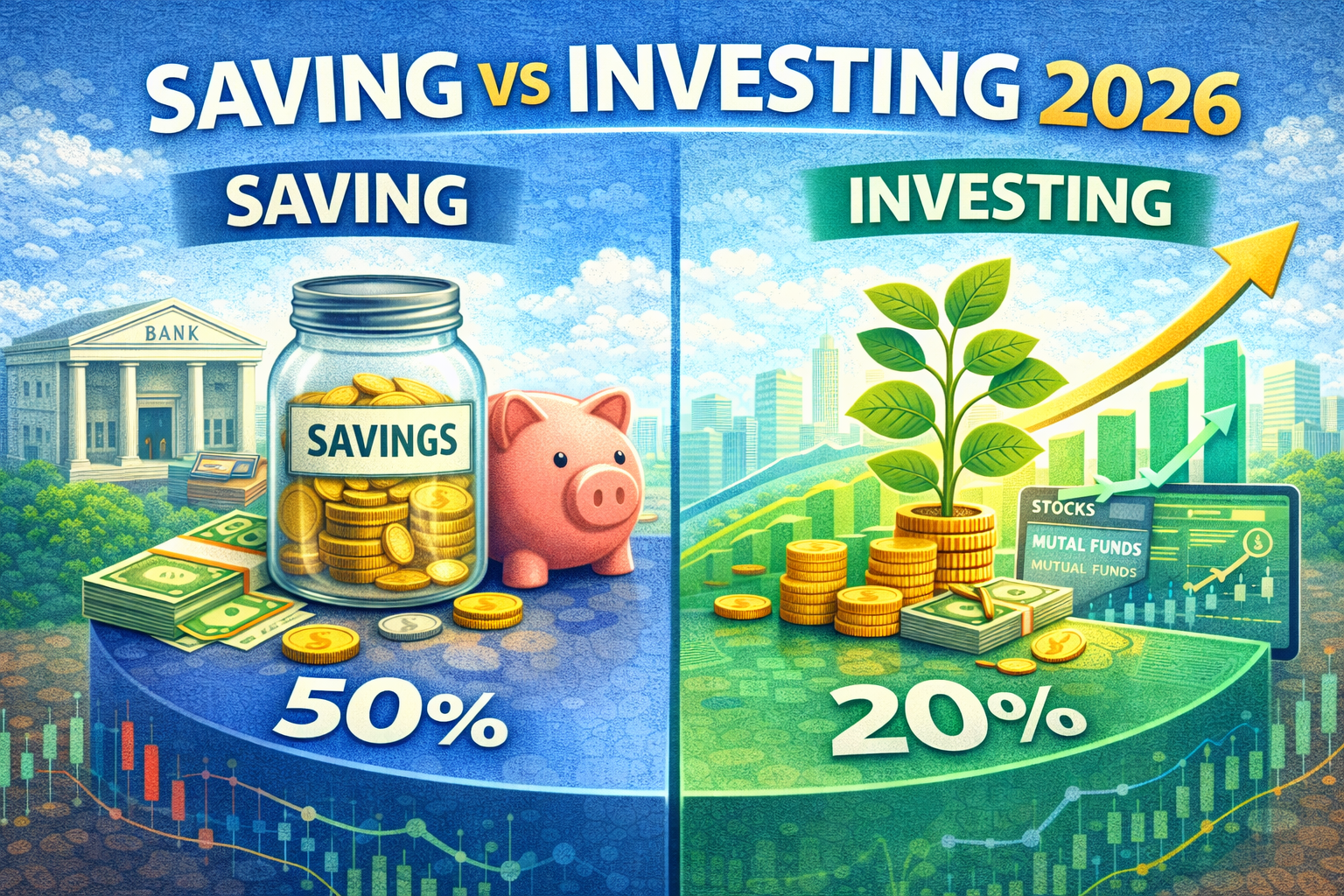
SAVING VS INVESTING: WHAT SHOULD YOU DO FIRST IN 2026?
Introduction
In 2026, managing money feels more complicated than ever.
Inflation has changed spending habits. Social media constantly promotes investing success stories. Financial influencers talk about stocks, ETFs, crypto, real estate, and passive income. Meanwhile, everyday people are just trying to stay financially stable.
And in the middle of all this noise, one important question stands out:
Saving vs investing — what should you do first in 2026?
Should you focus on building savings?
Or should you start investing immediately to grow wealth faster?
The answer isn’t emotional. It’s strategic.
In this detailed guide, we’ll break down saving vs investing in 2026, which one should come first, the pros and cons of each, real-life examples, practical steps, and my honest opinion based on realistic financial behavior.
If you want financial stability and long-term wealth, this is the clarity you need.
Understanding Saving in 2026
Saving means putting money aside in a safe, easily accessible place.
Common saving options include:
-
Savings accounts
-
High-interest savings accounts
-
Cash reserves
-
Emergency funds
The primary goal of saving is financial protection.
Saving protects you from:
-
Medical emergencies
-
Sudden job loss
-
Car repairs
-
Home maintenance
-
Unexpected bills
Savings are low risk and highly liquid. You can access the money quickly.
But returns are low.
Saving builds stability — not wealth.
Understanding Investing in 2026
Investing means putting money into assets that can grow over time.
Common investment options in 2026 include:
-
Stocks
-
ETFs
-
Index funds
-
Bonds
-
Real estate
-
Mutual funds
The goal of investing is long-term wealth growth.
Investing helps:
-
Beat inflation
-
Build passive income
-
Create financial freedom
-
Fund retirement
However, investing involves risk. Markets fluctuate. Asset prices rise and fall.
Investing grows your future.
Saving protects your present.
Why the Saving vs Investing Question Matters More in 2026
In 2026, inflation still impacts purchasing power.
If inflation averages 4% and your savings earn 2%, you are technically losing money in real value.
At the same time, economic uncertainty remains. Layoffs happen. Freelancers face inconsistent income. Businesses fluctuate.
That’s why choosing between saving and investing — and more importantly, choosing the right order — is critical.
The Correct Order: Save First, Then Invest
For most people, the smartest financial strategy in 2026 is:
-
Build a basic emergency fund
-
Eliminate high-interest debt
-
Expand savings to 3–6 months of expenses
-
Start consistent investing
This order creates both protection and growth.
Why Saving Should Come First
1. Emergencies Are Inevitable
Life is unpredictable.
If you invest all your money and an emergency happens, you might:
-
Sell investments at a loss
-
Use high-interest credit cards
-
Take loans
-
Damage your financial progress
An emergency fund prevents that.
Saving first builds a safety net.
2. Emotional Stability Improves Investing
Investing without savings creates anxiety.
If the market drops 15% and you also need money urgently, stress increases.
But when you have emergency savings:
-
You don’t panic sell
-
You stay invested
-
You think long-term
Saving first protects your mindset.
3. Financial Discipline Starts With Saving
Saving builds habits like:
-
Budgeting
-
Expense tracking
-
Delayed gratification
-
Consistency
These habits are necessary before serious investing.
How Much Should You Save Before Investing?
Financial experts recommend:
3 to 6 months of essential living expenses.
Example:
Monthly expenses = $2,500
Minimum emergency fund = $7,500
Ideal emergency fund = $15,000
Start small if necessary.
Even $1,000 is a strong first milestone.
When Should You Start Investing in 2026?
You should start investing when:
✔ Emergency fund is ready
✔ High-interest debt is cleared
✔ Income is stable
✔ You understand basic investment principles
Investing without these foundations increases risk significantly.
Why Investing Is Still Essential
Saving alone is not enough.
In 2026:
-
Inflation reduces purchasing power
-
Retirement costs are increasing
-
Wealth gaps are widening
Investing allows your money to grow through compound interest.
For example:
Investing $500 monthly at 8% annual return can grow significantly over 20 years.
Time + consistency = wealth.
Saving protects you.
Investing grows you.
Pros and Cons of Saving First
Pros
-
Financial security
-
Peace of mind
-
Protection from emergencies
-
Prevents debt
-
Builds discipline
Cons
-
Low returns
-
Slower wealth growth
-
Inflation impact
-
Can create excessive fear of investing
Pros and Cons of Investing First
Pros
-
Faster wealth growth
-
Compounding returns
-
Inflation protection
-
Long-term financial freedom
Cons
-
Market volatility
-
Risk of losses
-
Emotional stress
-
No safety cushion
Can You Save and Invest Simultaneously?
Yes — strategically.
If you have extra income:
Example allocation:
-
70% toward emergency savings
-
30% toward investments
Once emergency fund is complete:
-
70% investing
-
30% saving for short-term goals
This balanced approach works well in 2026.
Real-Life Scenario
Let’s compare two individuals.
Ali invests $800 monthly without savings.
After 4 months, he faces a $2,000 emergency. Market is down 10%. He sells at a loss.
Sara saves $600 and invests $200 monthly.
After 4 months, she has emergency savings. Investments continue growing.
Sara wins long term.
Saving first protects your investments.
My Personal Opinion
In my honest opinion, most people fail financially not because they don’t invest — but because they ignore financial foundations.
Social media glamorizes investing.
But real financial success is built on structure, discipline, and patience.
I strongly believe:
First build stability.
Then build wealth aggressively.
Money should provide peace, not pressure.
If investing makes you nervous because you lack savings, you are not financially ready.
Once your base is strong, investing becomes empowering.
The Psychological Advantage of Saving First
Saving reduces money anxiety.
When you know you can survive 3–6 months without income:
-
You negotiate better
-
You take smarter risks
-
You avoid desperation decisions
Financial security increases confidence.
Confidence improves investing performance.
What If You Are Young?
If you are in your 20s:
Yes, you have time.
But time doesn’t eliminate emergencies.
Build a small emergency fund first.
Then invest aggressively with long-term vision.
What If You Started Late?
If you are in your 30s or 40s:
Don’t panic.
Follow structure:
-
Emergency fund
-
Debt elimination
-
Automated investing
-
Increase contributions annually
Consistency matters more than timing.
The 2026 Smart Financial Formula
Stage 1:
Emergency savings complete
Stage 2:
Invest 15–25% of income
Stage 3:
Increase investment rate gradually
Stage 4:
Diversify assets
Structure reduces risk.
Conclusion
In 2026, the debate of saving vs investing should not divide you.
It should guide you.
Saving comes first because it creates protection, peace, and confidence.
Investing comes next because it creates growth, wealth, and freedom.
Without savings, investing is unstable.
Without investing, saving is limited.
The winning strategy is:
Save first.
Invest consistently.
Stay disciplined.
Think long term.
That’s how financial success is built in 2026.
FAQs
1. Should I save or invest first in 2026?
Save first. Build an emergency fund before investing to protect against unexpected expenses.
2. How much should I save before investing?
Ideally 3 to 6 months of essential expenses.
3. Can I invest while building savings?
Yes, but prioritize savings until your emergency fund is complete.
4. Is investing risky in 2026?
All investments carry risk, but diversified long-term investing reduces volatility impact.
5. Is saving enough to become wealthy?
No. Saving protects money, but investing grows it.
6. What is the biggest financial mistake?
Investing without savings or avoiding investing entirely due to fear.