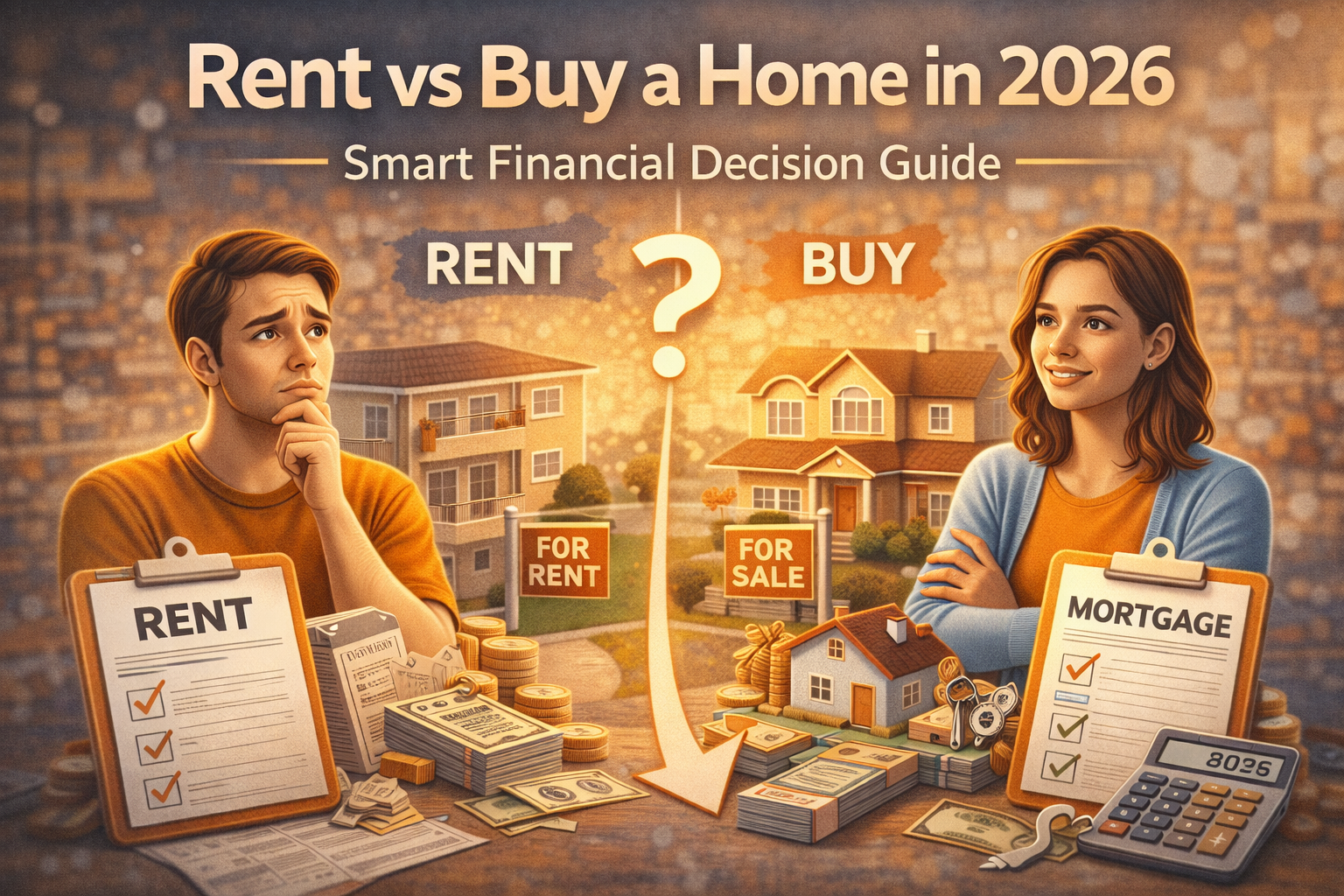
Rent vs Buy a Home in 2026 – What’s the Smarter Choice?
Introduction
In 2026, the debate between renting and buying a home feels more complicated than ever. Rising property prices, fluctuating interest rates, inflation pressure, and changing job markets have made this decision deeply personal and financially significant.
For many people, it’s not just about numbers — it’s about lifestyle, stability, freedom, and future security.
Some dream of owning their home. Others prefer flexibility. And honestly? Both sides have valid points.
Let’s break everything down in a simple, practical way so you can decide what truly fits your financial goals.
Understanding the 2026 Housing Market
Before choosing between rent vs buy a home in 2026, you need to understand the current environment:
-
Mortgage rates are still relatively high compared to pre-2020 levels
-
Property prices remain elevated in major cities
-
Rent prices have also increased significantly
-
Remote work has changed location priorities
-
Economic uncertainty still exists in many regions
This means there is no universal answer. The right decision depends on your financial stability, career plans, and long-term goals.
The Case for Renting in 2026
Renting often gets labeled as “wasting money,” but that’s not always true.
1. Flexibility and Freedom
If you:
-
Plan to move cities
-
Are early in your career
-
Work remotely
-
Are unsure about long-term plans
Renting gives you freedom.
You can relocate without worrying about selling property, paying agent fees, or market timing.
2. Lower Upfront Costs
Buying a home requires:
-
Down payment (often 10–20%)
-
Closing costs
-
Legal fees
-
Property taxes
-
Insurance
Renting usually requires:
-
Security deposit
-
First month’s rent
That’s it.
In 2026, with high property prices, the upfront cash needed to buy can be overwhelming.
3. No Maintenance Stress
When something breaks in a rental, the landlord handles it.
When something breaks in your house, you pay.
Roof issues, plumbing repairs, HVAC replacement — these can cost thousands.
Renting protects you from unexpected repair expenses.
The Case for Buying a Home in 2026
Now let’s talk about ownership.
1. Building Equity
When you buy a home, your monthly mortgage payments gradually build ownership. Over time, your property may increase in value.
Instead of paying rent to someone else, you’re investing in an asset.
That’s powerful.
2. Stability
Owning your home means:
-
No sudden rent increases
-
No landlord ending your lease
-
Long-term security
In uncertain times, stability brings peace of mind.
3. Potential Appreciation
Historically, real estate has appreciated over the long term. While short-term fluctuations happen, property often grows in value over decades.
In 2026, many buyers see property as a hedge against inflation.
Financial Comparison: Rent vs Buy in 2026
Let’s simplify the numbers.
Renting Costs:
-
Monthly rent
-
Rent increases
-
Renter’s insurance
Buying Costs:
-
Mortgage payment
-
Property taxes
-
Home insurance
-
Maintenance
-
HOA fees (if applicable)
-
Closing costs
The key difference?
Renting = predictable short-term expense
Buying = long-term investment with higher responsibility
But here’s the catch:
If you plan to stay in a home for less than 3–5 years, buying may not make financial sense due to transaction costs.
When Renting Makes More Sense
Renting might be better if:
-
You have unstable income
-
You don’t have emergency savings
-
You move frequently
-
Property prices are extremely high in your area
-
You want financial flexibility
In 2026, many young professionals are choosing to rent and invest the difference in stocks or businesses.
When Buying Makes More Sense
Buying may be better if:
-
You have stable income
-
You have 6+ months emergency savings
-
You plan to stay long-term
-
Mortgage payments are similar to rent
-
You want long-term wealth building
Homeownership works best for people thinking 10+ years ahead.
Emotional Side of Rent vs Buy
This decision is not only financial.
Owning a home brings pride.
Decorating your own space feels different.
There’s a sense of achievement.
But renting brings peace too.
No debt pressure.
No 20–30 year mortgage commitment.
Both choices carry emotional weight.
In My Opinion
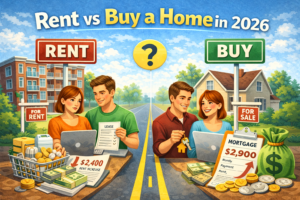
In my opinion, rent vs buy a home in 2026 is not about what sounds better — it’s about what matches your financial stage of life.
I believe too many people feel pressured to buy just because society says it’s a milestone. But buying without financial stability can create stress instead of security.
At the same time, if someone has strong savings, stable income, and long-term plans, buying a home can be one of the most powerful wealth-building steps.
Personally, I think the smartest approach in 2026 is this:
First build financial stability.
Then decide emotionally.
A home should bring comfort — not anxiety.
Hidden Risks to Consider
For Renters:
-
Rent increases
-
Lack of control
-
No equity growth
For Buyers:
-
Market downturn risk
-
High interest payments
-
Maintenance surprises
-
Liquidity issues (property is not easily sold)
Understanding risks helps avoid regret.
Smart Strategy for 2026
Here’s a balanced approach:
-
Save aggressively
-
Improve credit score
-
Compare rent vs mortgage in your area
-
Use online mortgage calculators
-
Think long-term (5–10 years minimum)
-
Avoid buying under pressure
Sometimes waiting 1–2 years improves your financial strength dramatically.
Long-Term Wealth Perspective
Owning a home can build wealth.
But so can investing.
If renting allows you to:
-
Invest monthly
-
Start a side business
-
Build diversified assets
You may grow wealth faster than stretching yourself for a mortgage.
The key is not the house — it’s your financial discipline.
Conclusion
The rent vs buy a home in 2026 debate does not have a universal answer. The smarter choice depends on your income stability, savings, career plans, and emotional readiness.
Renting offers flexibility and lower risk.
Buying offers stability and long-term equity growth.
Make your decision based on financial logic — not social pressure.
At the end of the day, the best home is the one that supports your peace of mind and financial future.
FAQs
1. Is it better to rent or buy in 2026?
It depends on your financial stability, location, and long-term plans.
2. How long should I stay in a house to make buying worth it?
Typically 3–5 years minimum to recover transaction costs.
3. Are mortgage rates too high in 2026?
Rates vary by country, but they are higher than historic lows. Compare carefully before deciding.
4. Can renting still build wealth?
Yes, if you invest the money you save instead of overspending.
5. Is buying a home always a good investment?
Not always. It depends on market timing, location, and your holding period.