Introduction
Personal Loans: A Real-World Guide to Borrowing Smart (From My Honest Perspective)
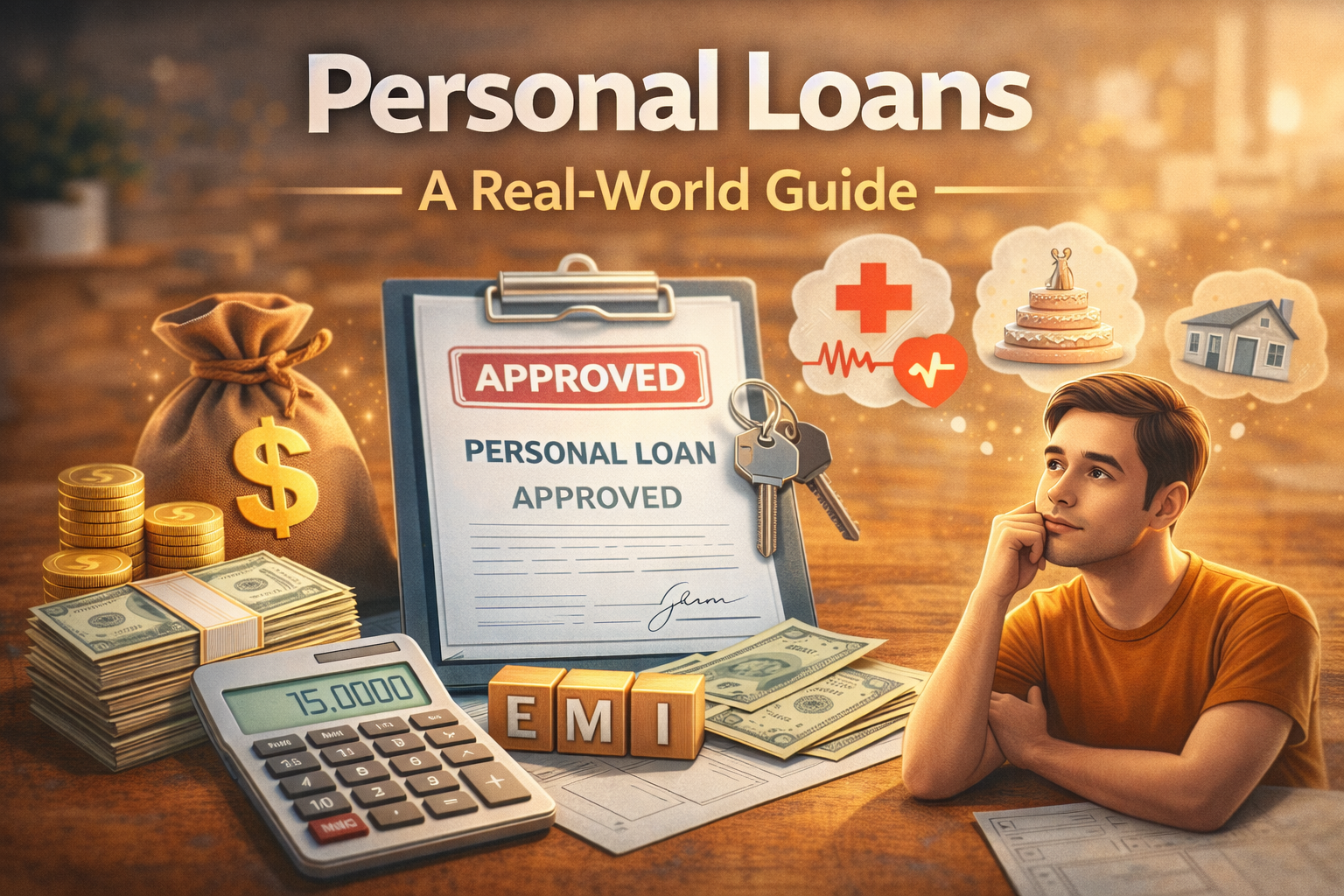
Let me start with something simple — almost everyone will think about personal loans at least once in their life.
Maybe not today. Maybe not tomorrow. But at some point, when savings feel tight and expenses feel urgent, the idea crosses your mind.
I’ve seen friends take personal loans confidently. I’ve also seen people regret rushing into one. And honestly, I believe personal loans are not dangerous — but misunderstanding them is.
This article isn’t just about definitions and formulas. It’s about the reality of borrowing money and how it feels to carry that responsibility.
What Are Personal Loans — Really?
In basic terms, personal loans are unsecured loans given by banks or financial institutions that you repay in fixed monthly installments, along with interest.
Unsecured means you don’t need to give property, gold, or a car as security. The bank trusts your income, employment stability, and credit history.
And that’s exactly why interest rates are usually higher than secured loans like home loans.
It sounds simple. Borrow money. Pay monthly. Finish the loan.
But in real life, it’s more than that.
Why People Choose Personal Loans
People don’t usually take loans for no reason. There’s always a story behind it.
Some common reasons include:
-
Medical emergencies
-
Wedding expenses
-
Education support
-
Home renovations
-
Debt consolidation
-
Sudden financial gaps
In my opinion, emergencies justify borrowing. Life is unpredictable. And sometimes, personal loans become a financial cushion when savings are not enough.
But borrowing for lifestyle upgrades? That’s where I pause.
The Convenience Trap
One thing about personal loans is speed.
Today, you can apply online.
Upload documents.
Get approval in hours.
Money arrives in your bank account quickly.
That convenience feels empowering.
But here’s my honest thought — quick access to money sometimes reduces the seriousness of the decision.
When something feels easy, we underestimate its long-term impact.
The Real Cost: Interest and Commitment
Let’s talk honestly.
When you borrow money, you’re not just taking the amount. You’re also agreeing to pay extra — the interest.
For example:
Borrow $10,000.
Repay maybe $12,000 or more over time.
That extra amount is the price of flexibility.
Many people focus only on EMI (Equated Monthly Installment). But what truly matters is:
-
Total repayment amount
-
Interest rate
-
Processing fees
-
Late payment penalties
In my opinion, understanding the total cost before signing anything is a sign of financial maturity.
The Emotional Weight of Monthly EMIs
This is something most articles ignore.
Debt feels heavy.
Every month, before you spend on yourself, your EMI must go out. It becomes a fixed obligation. A silent reminder.
For some, that creates discipline.
For others, it creates stress.
That’s why I believe personal loans should fit your life — not control it.
If EMI forces you to sacrifice essentials or creates anxiety, the loan amount is too high.
When Personal Loans Make Sense
I’m not against personal loans. In fact, in certain situations, they are very practical.
1. Medical Emergencies
Health cannot wait for savings to grow.
2. Debt Consolidation
If you have multiple high-interest credit cards, combining them into one structured personal loan can reduce financial chaos.
3. Urgent Family Responsibilities
Sometimes responsibilities come before comfort.
In these situations, personal loans can provide breathing space.
When You Should Avoid Personal Loans
Here’s my straightforward advice:
Avoid personal loans for:
-
Luxury gadgets
-
Expensive vacations
-
Social pressure spending
-
Impressing others
Temporary happiness is never worth long-term pressure.
There’s a different kind of peace in buying something with saved money. No EMI. No tension. Just ownership.
Personal Loans and Credit Score
Your credit score plays a huge role in personal loans.
Higher credit score:
-
Better approval chances
-
Lower interest rates
Lower credit score:
-
Higher interest
-
Risk of rejection
Interestingly, responsible repayment of personal loans can improve your credit score.
But missed payments? They damage it quickly.
And rebuilding financial reputation takes time.
Fixed vs Flexible Thinking
Banks offer fixed EMIs. That’s predictable.
But your life income may not always be predictable.
Before taking a personal loan, ask yourself:
-
Is my job stable?
-
Do I have emergency savings?
-
What happens if income reduces?
In my opinion, you should have at least 3–6 months of emergency funds before committing to long-term EMIs.
Personal Loans vs Credit Cards
Many people misuse credit cards and then struggle with huge interest.
Credit card interest is usually much higher than personal loan interest.
If you’re stuck in revolving credit card debt, converting it into a structured personal loan can actually be smarter.
Structure reduces chaos.
The Psychology of Borrowing
This may sound deep, but money decisions are emotional.
Sometimes we borrow because:
-
We feel pressured
-
We compare ourselves with others
-
We want quick solutions
But true financial strength comes from patience.
In my experience, delaying a loan decision by even a few days brings clarity.
Impulse fades. Logic returns.
Smart Borrowing Tips (From My Perspective)
If you decide to take a personal loan, do it wisely.
Here’s what I personally recommend:
-
Borrow less than what you’re eligible for.
-
Compare multiple banks before choosing.
-
Check for hidden charges.
-
Read the fine print carefully.
-
Avoid multiple loans at once.
And most importantly:
Never borrow without a repayment plan.
Are Personal Loans Good or Bad?
This question doesn’t have a universal answer.
Personal loans are tools.
In disciplined hands, tools build homes.
In careless hands, tools cause damage.
It all depends on awareness, planning, and emotional control.
Final Thoughts: Borrowing With Balance
We live in a world where financial flexibility is necessary. Avoiding loans completely may not always be realistic.
But borrowing blindly is risky.
In my opinion, personal loans should support your life — not dominate it.
Take them when needed.
Repay them with discipline.
And learn from the experience.
At the end of the day, true financial freedom is not about how much you can borrow — it’s about how confidently you can manage what you owe.
Conclusion: Should You Take a Personal Loan?
When it comes to personal loans, I truly believe the decision should never be rushed. Borrowing money is not just a financial step — it’s a commitment to your future income.
In my opinion, personal loans are neither good nor bad. They are simply financial tools. Used wisely, they can help you manage emergencies, consolidate debt, or handle important life responsibilities. Used carelessly, they can create long-term stress.
The key is balance.
Before applying for personal loans, take a pause and ask yourself:
-
Do I really need this loan?
-
Can I comfortably afford the monthly EMI?
-
Do I have a backup plan if my income changes?
If your answers are confident and practical, then a personal loan may support your goals. But if there’s doubt or emotional pressure behind the decision, it’s better to step back and rethink.
Financial peace is more valuable than quick money.
Frequently Asked Questions (FAQs) About Personal Loans
1. What are personal loans used for?
Personal loans are commonly used for medical emergencies, weddings, home repairs, travel, debt consolidation, or other urgent financial needs. Since they are unsecured, they offer flexibility in usage.
2. Are personal loans safe?
Yes, personal loans are safe if borrowed from trusted financial institutions and repaid responsibly. The risk comes from borrowing more than you can afford.
3. How much personal loan can I get?
The amount depends on your income, credit score, employment stability, and existing debts. However, in my opinion, you should borrow less than the maximum amount offered.
4. What is the typical interest rate on personal loans?
Interest rates vary depending on your country, credit score, and lender. Generally, personal loans have higher interest rates than secured loans like home loans.
5. Do personal loans affect credit score?
Yes. If you pay EMIs on time, your credit score can improve. Missed payments or defaults can significantly lower your score.
6. Can I repay a personal loan early?
Many banks allow early repayment, but some may charge a prepayment fee. Always check loan terms before signing.
7. Is it better to use a credit card or a personal loan?
If you cannot pay your credit card bill in full, converting the amount into a personal loan with structured EMIs may be a better option due to lower interest rates.