
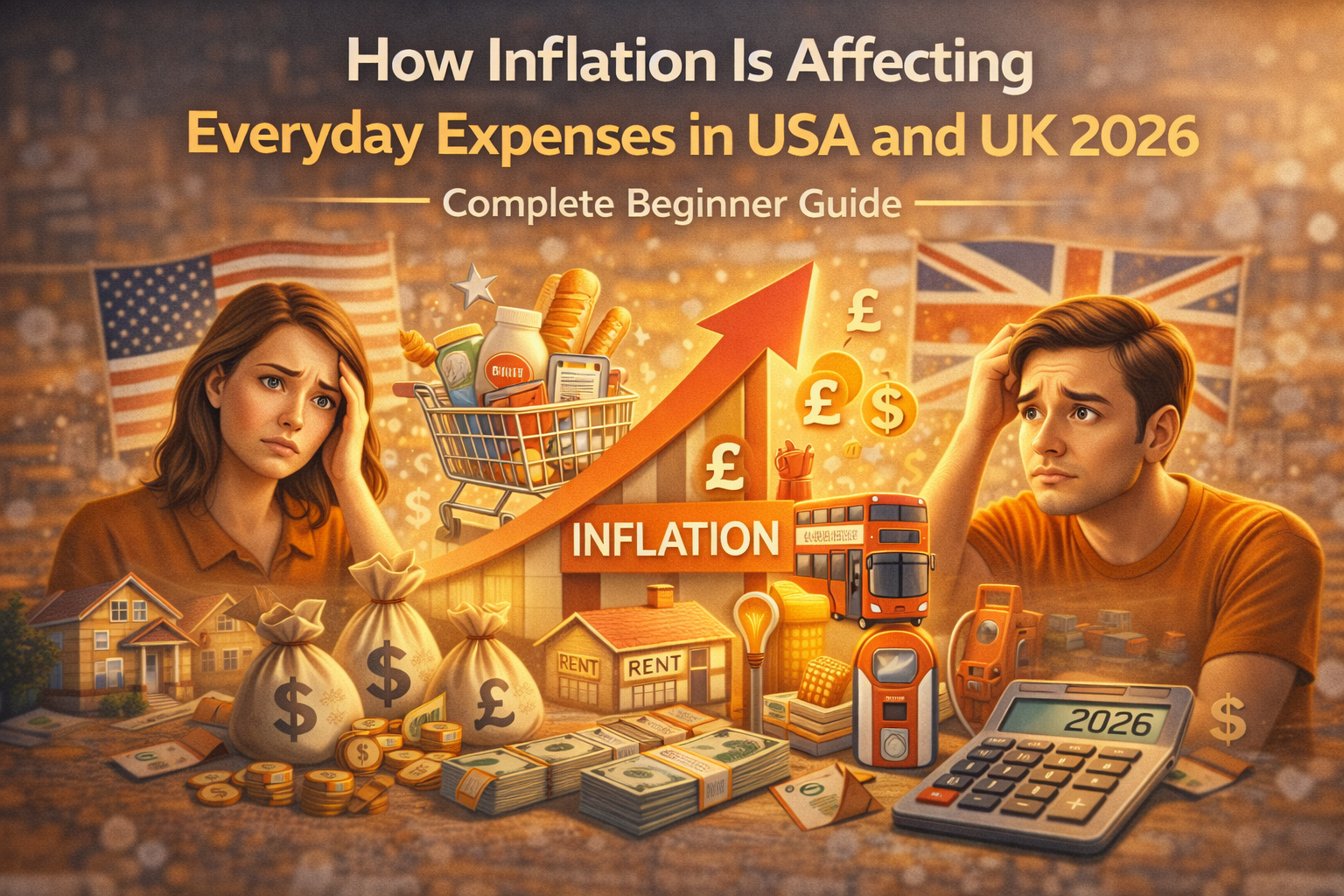
How Inflation Is Affecting Everyday Expenses in USA and UK 2026
Introduction
Inflation has become one of the most discussed economic issues in recent years. In 2026, households in both the United States and the United Kingdom continue to feel its impact in their daily lives.
While inflation rates may fluctuate, the practical effect remains clear: everyday expenses are higher than they were just a few years ago. From grocery bills to rent payments, families are adjusting budgets and rethinking spending habits.
This article explores how inflation is affecting everyday expenses in the USA and UK in 2026, using an educational and balanced perspective.
1. Rising Grocery and Food Costs
Food prices are among the most noticeable effects of inflation.
In both countries, consumers have seen:
-
Higher prices for fresh produce
-
Increased meat and dairy costs
-
Rising packaged food prices
Supply chain challenges, energy costs, and global market conditions have all contributed to price increases. As a result, many households are switching to budget brands or reducing non-essential purchases.

2. Housing and Rent Pressures
Housing remains one of the largest monthly expenses.
In the USA:
-
Rent prices in urban areas remain elevated.
-
Mortgage rates have affected new home buyers.
-
Property taxes and maintenance costs have increased.
In the UK:
-
Higher interest rates have impacted mortgage repayments.
-
Rental demand has pushed prices upward.
-
Energy-efficient housing improvements add additional costs.
Housing inflation significantly impacts middle-income families, especially first-time buyers.
3. Energy and Utility Bills
Energy costs continue to influence monthly budgets in 2026.
Both US and UK households report:
-
Higher electricity bills
-
Increased heating costs
-
Fluctuating fuel prices
Energy market volatility and environmental transition policies have contributed to price adjustments. Many households are investing in energy-saving appliances to manage expenses.
4. Transportation Expenses
Transportation is another key area affected by inflation.
Costs include:
-
Fuel price fluctuations
-
Public transportation fare increases
-
Car insurance premiums
-
Vehicle maintenance costs
In large cities, commuting expenses have increased, putting additional pressure on working professionals.
5. Healthcare and Insurance (USA Focus)
In the United States, healthcare remains a significant concern.
Medical services, insurance premiums, and prescription medications have experienced gradual price increases. Even small percentage changes can impact families with ongoing medical needs.
In the UK, while the NHS provides public healthcare, private insurance and certain services have also seen cost adjustments.
6. Everyday Household Goods
Basic household items such as:
-
Cleaning products
-
Toiletries
-
Clothing
-
School supplies
have gradually become more expensive.
Although price increases may seem small individually, combined they create noticeable financial strain over time.
7. Impact on Savings and Lifestyle
Inflation not only increases costs — it also affects savings power.
Many households report:
-
Reduced monthly savings
-
Delayed large purchases
-
Increased reliance on budgeting tools
Consumers are becoming more financially cautious, prioritizing essential spending over discretionary expenses.
How People Are Adapting in 2026
To manage inflation, households are:
-
Creating stricter monthly budgets
-
Comparing prices before purchasing
-
Using discount programs
-
Seeking additional income sources
-
Reducing luxury spending
Financial awareness has increased significantly as people try to protect their purchasing power.
In My Opinion
In my opinion, inflation in 2026 is not just about numbers or economic reports — it’s something people genuinely feel in their daily lives. Whether it’s paying more for groceries, noticing higher utility bills, or adjusting monthly budgets, the impact is real for many families in both the USA and the UK. I think what makes it more challenging is that income growth does not always keep up with rising expenses. However, I also believe that this situation has encouraged people to become more financially aware and disciplined. Many households are learning how to budget smarter, compare prices carefully, and focus on essential spending. While inflation creates pressure, it also pushes people to make more thoughtful financial decisions for the long term.
Conclusion
In 2026, inflation continues to affect everyday expenses in both the USA and the UK. From groceries and rent to energy and transportation, rising costs are shaping how families manage their monthly budgets. While economic conditions may improve over time, financial awareness and smart budgeting remain essential. Understanding these changes helps individuals make better decisions and stay financially prepared in an uncertain environment.
FAQs – How Inflation Is Affecting Everyday Expenses in USA and UK 2026
1. Why are everyday expenses still high in 2026?
Inflation, supply chain costs, and energy market changes continue to influence prices.
2. Is inflation worse in the USA or the UK?
Both countries face challenges, though the impact varies depending on housing, energy policies, and economic conditions.
3. Which expenses are most affected by inflation?
Housing, food, energy, and transportation are the most impacted categories.
4. How can families manage rising costs?
Budget planning, energy efficiency, price comparison, and saving strategies can help reduce financial pressure.
5. Will inflation decrease soon?
Inflation trends depend on economic policies, global markets, and interest rate adjustments.