Loans and Finance: Understanding Home Loans the Smart Way (From My Personal Experience)
Money is a sensitive topic for most of us. We work hard, plan for years, and still feel confused when it comes to loans and finance. I’ve personally seen how a loan can either build your future or become a long-term burden, depending on how wisely it’s handled.
Among all types of loans, home loans are the most common — and also the most misunderstood. People often take them emotionally, not financially. In this article, I’ll explain loans and finance in a simple, honest way, with a detailed guide on home loans, mixed with my own thoughts and lessons.
If you’re planning to buy a house or just want clarity, this guide is for you.
What Is a Loan in Finance?
In simple words, a loan is money borrowed from a bank or financial institution that you promise to repay over time, along with interest.
From a finance point of view, loans exist to help people achieve goals they cannot afford immediately — like:
-
Buying a home
-
Starting a business
-
Paying for education
-
Handling emergencies
But here’s my honest opinion:
👉 A loan is a tool, not free money.
Used wisely, it helps you grow. Used carelessly, it can control your life.
Types of Loans in Finance (Quick Overview)
Before diving into home loans, it’s important to understand where they stand among other loan types:
-
Personal Loans – Unsecured, high interest, quick cash
-
Home Loans – Long-term, lower interest, property-backed
-
Student Loans – Student-focused, flexible repayment
Out of all these, home loans are considered “good loans” in finance — if taken correctly.
What Is a Home Loan?
A home loan is a long-term loan taken to:
-
Buy a new house
-
Construct a home
-
Purchase a plot and build later
-
Renovate or extend an existing house
The property itself acts as security (collateral). That’s why home loan interest rates are usually lower compared to personal loans.
From my perspective, a home loan is not just a financial decision — it’s an emotional one. Owning a home gives security, confidence, and stability.
How Home Loans Work (Step-by-Step)
Many people feel scared of home loans because they don’t understand the process. Let me simplify it:
1. Loan Application
You apply to a bank or financial institution with:
-
Income proof
-
CNIC / ID
-
Property documents
-
Bank statements
2. Eligibility Check
Banks check:
-
Your monthly income
-
Job or business stability
-
Existing loans
-
Credit history
💡 My opinion: Never apply for the maximum amount just because the bank offers it.
3. Loan Amount & Tenure
-
Loan tenure usually ranges from 5 to 30 years
-
Longer tenure = lower EMI but more interest overall
This is where finance knowledge matters. Many people only look at monthly installments and ignore the total interest paid.
4. Interest Rate (Very Important)
Home loans come with:
-
Fixed interest rate – Same EMI throughout
-
Variable interest rate – EMI changes with market rates
Personally, I feel variable rates are risky if your income is not increasing regularly.
Home Loan EMI Explained Simply
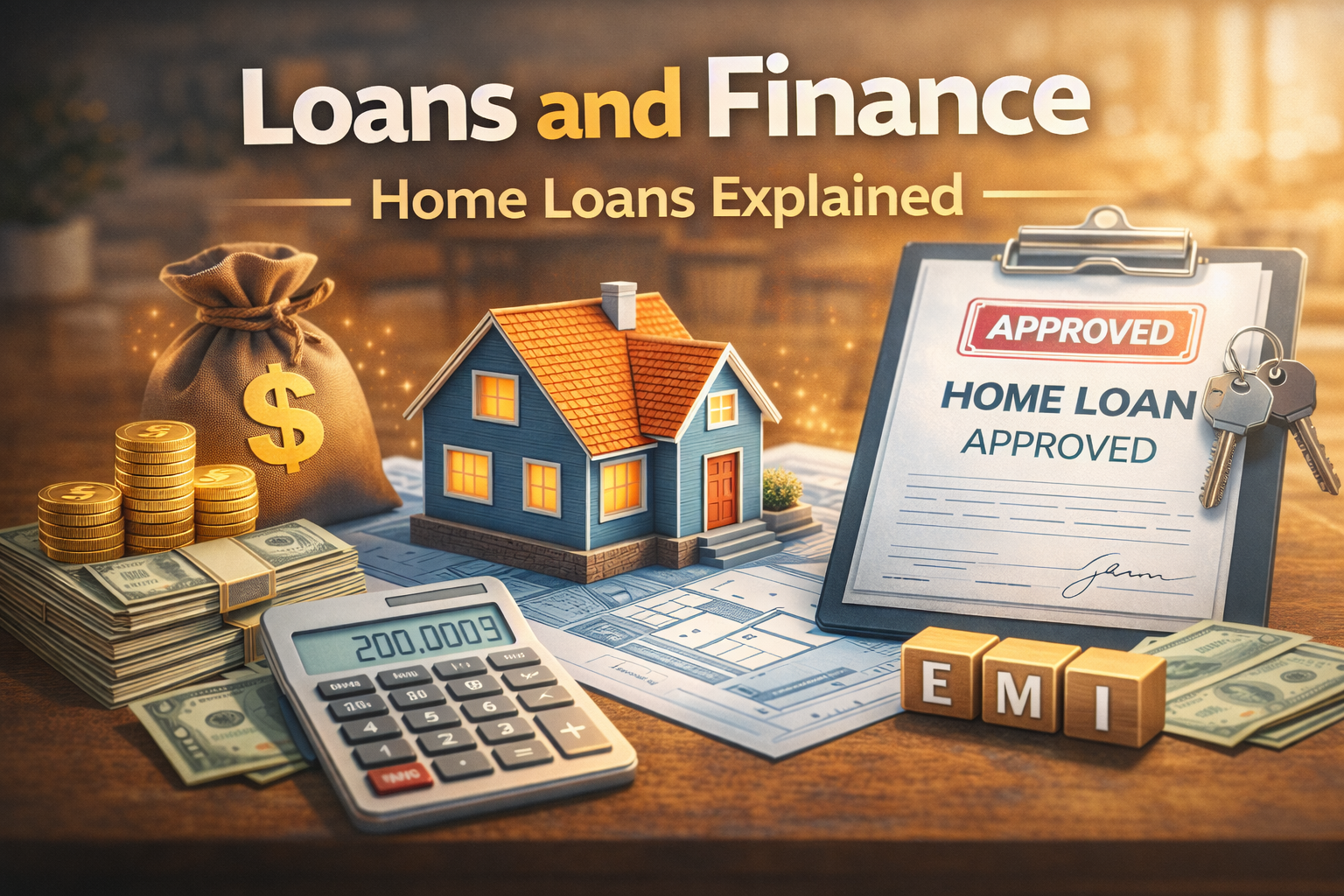
EMI (Equated Monthly Installment) is the fixed amount you pay every month.
It includes:
-
Principal (actual loan amount)
-
Interest
In early years, most of your EMI goes toward interest — and this surprises many people later.
👉 My advice:
If possible, prepay some amount every year to reduce interest burden.
Down Payment: The Reality People Ignore
Banks never finance 100% of the house value.
Usually:
-
You pay 20–30% as down payment
-
Bank finances the rest
Many first-time buyers ignore this and struggle later. In my opinion, if you don’t have money for down payment, you’re not financially ready for a home loan yet.
Documents Required for Home Loans
While requirements vary, most banks ask for:
-
Identity & address proof
-
Salary slips or business income proof
-
Tax returns (if applicable)
-
Property ownership documents
Always double-check property papers. I’ve seen people regret poor verification for years.
Advantages of Home Loans (Why They’re Considered Good)
From a finance perspective, home loans have several benefits:
-
Lower interest rates
-
Long repayment period
-
Asset creation (you own property)
-
Possible tax benefits (country-specific)
In my opinion, a home loan is one of the few debts that actually builds wealth — if planned properly.
Disadvantages & Risks of Home Loans
Let’s be honest — home loans are not perfect.
Major risks include:
-
Long-term financial commitment
-
Job loss or income instability
-
Rising interest rates
-
Legal issues with property
This is why I always say:
👉 Never take a home loan at the edge of your affordability.
Home Loan vs Renting: My Honest View
People often ask: Is it better to rent or buy?
Here’s my personal take:
-
Renting offers flexibility
-
Buying gives emotional and financial security
If you plan to stay in one city long-term and have stable income, buying makes sense. Otherwise, renting is not a failure — it’s a smart financial choice.

Tips to Choose the Right Home Loan
These tips come from real-world mistakes I’ve seen:
-
Compare multiple banks
-
Don’t ignore hidden charges
-
Choose EMI that allows savings
-
Read loan agreement carefully
-
Keep emergency funds ready
Finance is not just about numbers — it’s about peace of mind.
My personal openion on home loans
According to me, getting loan for home is not bad because you need to have a proper place to live if you dont have money to buy a home than you must need to get a loan . But there is also a risk if you have well setteled job and you know you will clear this loan than you will be ready to get a loan otherwise, I dont recommended you to get loan without seeing your personal financing condition.
Note :This is only educational information.
Final Thoughts: Loans Are Not the Enemy
In today’s world, avoiding loans completely is unrealistic. But blindly taking them is dangerous.
A home loan, when taken with planning, patience, and discipline, can be a powerful financial step. But when taken emotionally or under pressure, it becomes a lifelong stress.
My personal belief is simple:
A house should bring comfort, not constant worry.
FAQs About Home Loans and Finance
1. Is a home loan good or bad?
A home loan is considered good if it fits your income, future plans, and financial discipline.
2. How much home loan should I take?
Ideally, your EMI should not exceed 30–35% of your monthly income.
3. Can I repay a home loan early?
Yes, most banks allow prepayment. Always confirm prepayment charges before signing.
4. Fixed or variable interest rate — which is better?
Fixed offers stability, variable may save money long-term but comes with risk.
5. Is taking a home loan without savings a good idea?
In my opinion, no. Savings act as a safety net during emergencies.