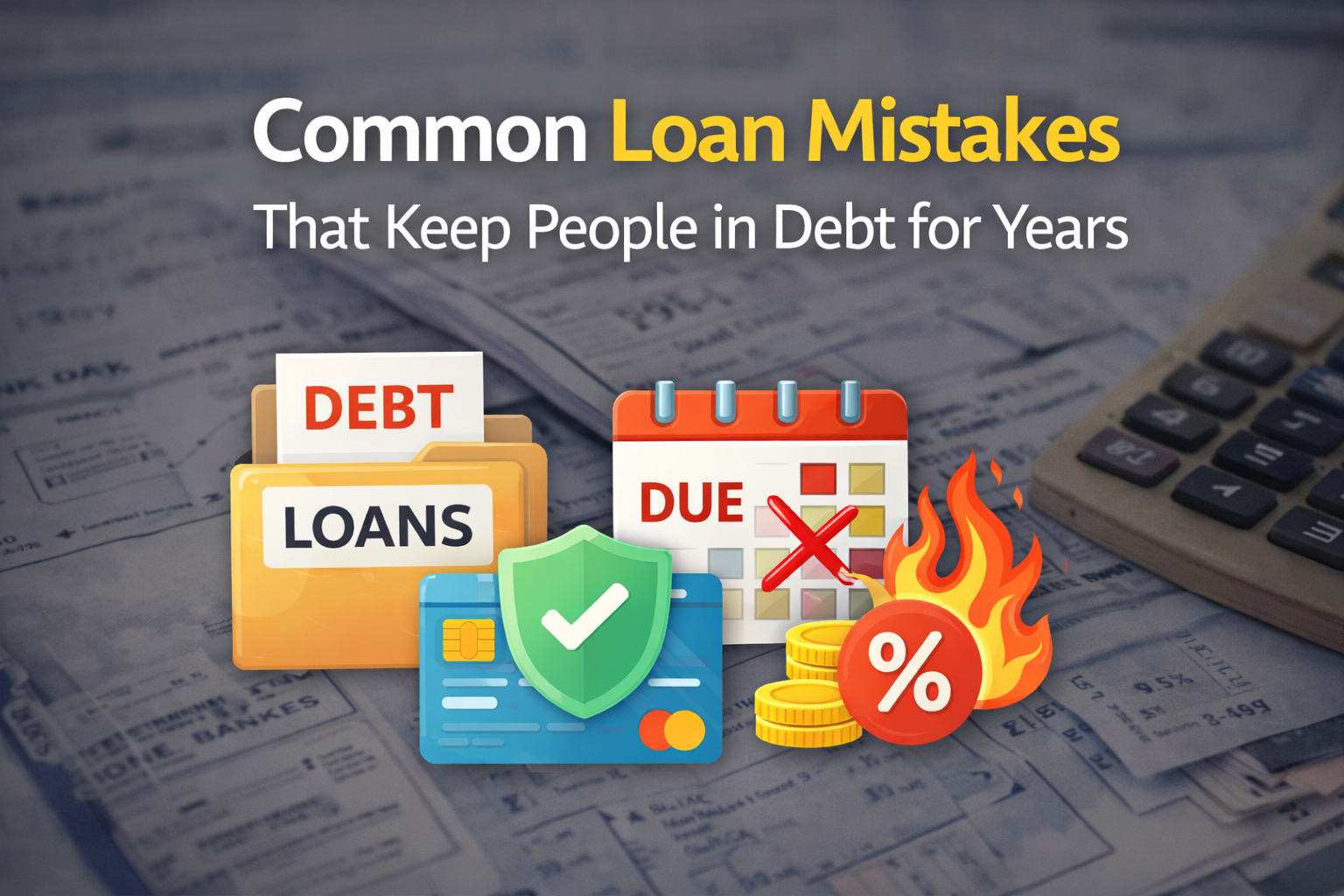
Common Loan Mistakes That Keep People in Debt for Years (Avoid These in 2026)
Introduction
Loans can be really helpful when you use them the way. They can help you pay for things like school a house, medical bills and business investments.. Loans can also be a big financial problem if you do not manage them properly.
Millions of people around the world have trouble with debt because they make mistakes with loans that increase the interest costs and make the repayment period longer. These mistakes might seem small at first. Over time they can turn a manageable loan into years of financial trouble.
For example taking a loan without knowing the interest rate paying the minimum payment or borrowing more money than you need are all common mistakes that can get you stuck in debt. Understanding these mistakes is very important if you want to stay financially stable and avoid financial stress. By learning about these mistakes you can make smarter decisions when borrowing money and take control of your financial future.
This guide explains the common mistakes people make with loans that keep them in debt for years and provides practical tips to avoid them.
Taking a Loan Without Understanding the Interest Rate
One of the mistakes people make with loans is borrowing money without fully understanding the interest rate. Many people only look at the payment and ignore the total interest they will pay over the life of the loan. However interest rates play a role in determining the true cost of borrowing.
For example imagine you borrow $10,000.
* At 10% interest you may pay $2,000 in interest.
* At 20% interest the interest cost can almost double.
This is why it is very important to understand the percentage rate before accepting any loan offer. Always compare lenders and choose the lowest interest rate available.
Borrowing Money Than Necessary
Another common mistake people make with loans is borrowing more money than they actually need. When lenders approve loan amounts it can be tempting to take the full amount. However borrowing money increases the total interest you will have to repay.
For example if you need $8,000 but borrow $12,000 the extra $4,000 will generate interest charges over time. This means you will be paying interest on money that you did not even need. A smarter approach is to borrow what you truly need and avoid unnecessary financial obligations.
Ignoring the Loan Terms and Conditions
Many people rush through the loan approval process without reading the agreement. This is one of the dangerous mistakes because loan contracts often include important details such as interest rates late payment penalties, processing fees and early repayment charges. Ignoring these details can lead to costs later.
For example some lenders charge penalties if you repay the loan early. Others may increase the interest rate after a promotional period ends. Taking a few minutes to read the terms carefully can prevent surprises.
Paying the Minimum Payment
Paying only the minimum payment is one of the most well-known mistakes, especially with credit card debt. Credit cards usually require a minimum payment each month often around 2% to 5% of the balance. While this keeps your account active the remaining balance continues to accumulate interest.
Over time this creates a cycle where the debt decreases slowly while interest charges keep growing. Many people spend years paying credit card debt because they rely on minimum payments. Whenever possible always pay more than the payment to reduce interest costs and repay the balance faster.
Taking Multiple Loans at the Same Time
Another mistake people make with loans is taking several loans at the same time. For example someone might have a loan, a credit card balance, a car loan and a payday loan. Managing loans increases financial pressure because each loan requires monthly payments and interest charges.
If your income decreases or unexpected expenses occur, keeping up with these payments can become difficult. This situation often leads to missed payments, penalties and additional debt. Before taking a loan always consider your existing financial commitments.
Missing or Delaying Loan Payments
Late payments are another mistake that can have financial consequences. Missing a loan payment can result in payment penalties, higher interest rates and damage to your credit score. A lower credit score can make future loans more expensive because lenders may charge interest rates to compensate for risk.
Setting up payments or payment reminders can help ensure that you never miss a due date.
Using Loans for Unnecessary Spending
Loans should generally be used for financial needs, not lifestyle upgrades. However many people make the mistake of using borrowed money for things like gadgets, luxury shopping, vacations and entertainment. These purchases lose value quickly. The loan payments remain.
Using loans for -essential spending can create long-term financial stress without providing lasting benefits.
Not Comparing Lenders
Many people accept the first loan offer they receive. This is another mistake because different lenders may offer different interest rates and terms. Comparing lenders can help you find interest rates, lower processing fees and more flexible repayment options.
Even a small reduction in interest rates can save hundreds or thousands of dollars over the life of the loan. Always research lenders before making a decision.
Ignoring Emergency Savings
One of the financial mistakes people make is relying entirely on loans during emergencies. Without an emergency fund unexpected expenses like bills or car repairs often lead to borrowing money. This cycle creates repeated debt.
Building an emergency savings fund can reduce the need for loans and protect your financial stability. Financial experts usually recommend saving three to six months of living expenses.
Pros and Cons of Taking Loans
Pros
* Loans help cover expenses
* Loans allow flexibility
* Loans are useful for emergencies
* Loans can build credit history when managed properly
Cons
* Interest increases the cost
* There is a risk of long-term debt
* Loans have payment obligations
* Loans can potentially damage your credit score if mismanaged
Understanding both the advantages and risks can help you avoid mistakes.
My Personal Opinion
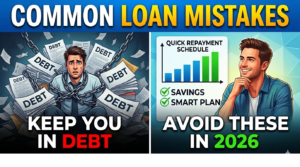
In my opinion loans themselves are not the problem. The real issue is how people use and manage borrowed money. Many people fall into debt because they make decisions quickly without understanding the long-term consequences. Taking time to research loan options compare lenders and plan repayment strategies can prevent financial problems.
Avoiding the mistakes discussed in this guide can help people use loans responsibly and maintain financial freedom. Loans should be treated as a tool, not a lifestyle solution.
Conclusion
Loans can be extremely useful when managed wisely. They can also create long-term financial stress if borrowers make poor decisions. Many people remain in debt for years because they make mistakes such as borrowing more than necessary ignoring interest rates relying on minimum payments and taking multiple loans simultaneously.
The good news is that these mistakes are completely avoidable. By understanding loan terms borrowing responsibly and making payments anyone can manage debt effectively and avoid long-term financial problems. Smart borrowing decisions today can protect your future tomorrow.
FAQs
1. What are the common mistakes people make with loans?
The common mistakes include borrowing too much ignoring interest rates paying only the minimum payment and missing loan payments.
2. Why do people stay in debt for years after taking loans?
People often stay in debt because of interest rates, minimum payments and taking multiple loans at the same time.
3. How can I avoid mistakes?
You can avoid mistakes by comparing lenders borrowing what you need and making payments on time.
4. Is it bad to have loans?
Having multiple loans increases financial pressure and can make it harder to manage monthly payments.
5. Should loans only be used for expenses?
Yes. Loans are best used for expenses such, as education, medical emergencies or home improvements.