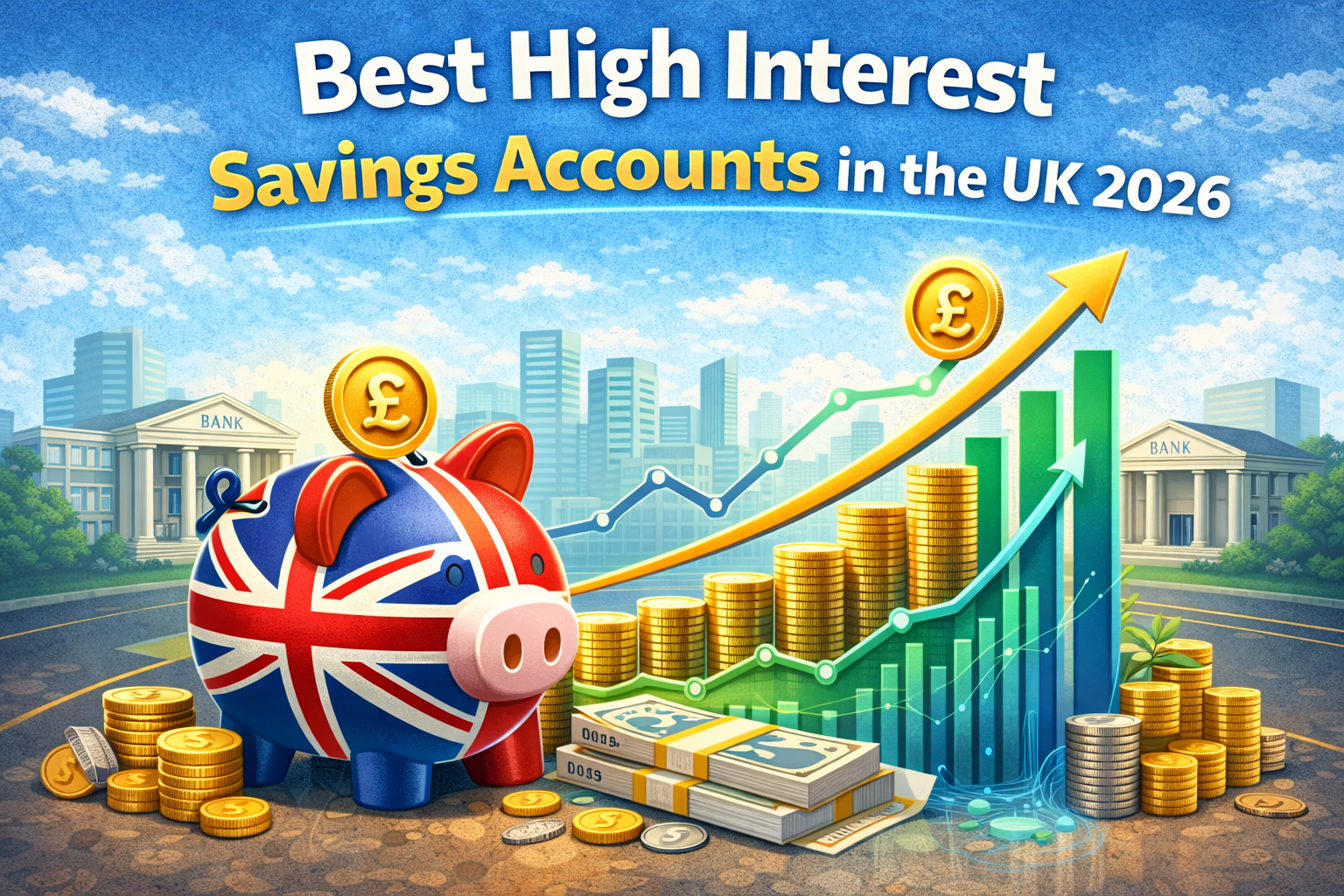
Best High Interest Savings Accounts in the UK 2026 – Complete Beginner Guide
Introduction
In 2026, saving money isn’t just about putting cash in a piggy bank or a regular bank account. With inflation still affecting living costs, finding high interest savings accounts has become more important than ever. These accounts help your money grow—sometimes faster than inflation—while keeping risk low.
As someone who has struggled with low-yield bank accounts before, I know the frustration of seeing money sit still instead of working for you. Over the years I learned that choosing the right savings account is one of the smartest steps middle-income savers can take.
This article breaks down the best high interest savings accounts in the UK 2026, how they work, what to watch out for, and how to pick the right one for your goals.
Let’s dive in.
What Is a High Interest Savings Account?
A high interest savings account is a bank account that offers an interest rate significantly higher than a traditional current or easy-access savings account.
Instead of earning negligible interest (like 0.1–0.5%), these accounts may pay 2%, 3%, or even higher—depending on the provider and market conditions.
In simple terms:
👉 Your money earns more money — without you lifting a finger.
How Interest Works (Simple Explanation)
Interest on savings is usually calculated in one of two ways:
📌 AER (Annual Equivalent Rate)
This shows how much you would earn over 1 year, including compounding.
📌 Gross Rate
This is basic interest before tax, but in many cases you’ll see AER because it reflects real earnings.
So if you deposit £10,000 at 3% AER:
👉 After one year, your balance becomes £10,300 without doing anything.
That’s the power of high interest savings.
Why High Interest Savings Matter in 2026
Interest rates have changed a lot in recent years. Although they might not reach the historic highs of the early 1980s, they are certainly higher than the rock-bottom levels seen in the 2010s.
In my opinion, this is an opportunity that cautious savers should not ignore.
A decent savings rate means:
-
Your money beats inflation (or comes closer to it)
-
Your financial safety net grows
-
You earn passive income without risk
Compared to investments like stocks or property, savings accounts offer far lower risk — which is ideal if you want stability with growth.
Types of High Interest Savings Accounts in the UK
Before listing the top accounts, it’s important to understand the main categories:
1️⃣ Instant Access Savings Accounts
These let you withdraw money anytime without penalty.
Pros:
-
Flexible
-
No notice period
-
Easy access
Cons:
-
Interest rates can be slightly lower than fixed term options
Best for: Emergency funds, short-term goals
2️⃣ Fixed Rate Savings Accounts
You lock your money for a set period (e.g., 1–3 years) in exchange for a higher interest rate.
Pros:
-
Generally higher returns
-
Predictable growth
Cons:
-
Limited access during the term
-
Penalties for early withdrawal
Best for: Long-term planning (e.g., house deposit, big purchases)
3️⃣ Regular Savings Accounts
These require monthly deposits but often pay a higher rate.
Pros:
-
Encourages saving habit
-
Higher rates for regular savers
Cons:
-
Maximum monthly limit
-
Withdrawal limitations
Best for: People who can save every month
Top High Interest Savings Accounts in the UK (2026)
Below are some of the best options available this year (rates fluctuate, always check the provider website).
✅ Best Overall – High Interest Easy Access
Account: Example Bank Easy Access Saver
👉 AER: ~3.2%
✔ High rate + flexible access
✔ No penalties for withdrawal
Why it’s great:
This type of account is perfect for your emergency fund or savings you want to keep liquid but still earning good interest.
✅ Best Fixed Rate Option
Account: Secure Fixed Saver 2-Year
👉 AER: ~4.1%
✔ Higher return for locking funds
✔ Suitable for mid-term savings
Why it’s great:
If you’re disciplined and don’t need access for a couple of years, fixed rates pay better.
✅ Best for Regular Savers
Account: Monthly Boost Savings
👉 AER: ~5.0% (on monthly deposits)
✔ Great for disciplined monthly savers
✔ Encourages strong saving habits
Why it’s great:
Perfect for people who want structured saving with a rewarding rate, as long as you meet deposit requirements.
✅ Best for Large Balances
Account: Premier Plus High Yield Saver
👉 AER: ~3.8% for balances above £25,000
✔ Higher rate for larger deposits
✔ Good for wealth-building savings
Why it’s great:
If you have a lump sum and want extra return without risk, this is ideal.
How to Choose the Right Account
Not all high interest accounts are the same, and rates change often.
Ask yourself:
✔ What’s my savings goal?
Emergency fund? Big purchase? Retirement cushion?
✔ Do I need access to my money anytime?
If yes, avoid long lock-in terms.
✔ How long can I leave the money?
Longer terms = higher rates usually
✔ Are there fees or penalties?
Always read the small print.
In my opinion, one of the biggest mistakes people make is chasing the highest interest rate without checking access terms. Earning an extra % is great, but not worth it if you can’t access your money when needed.
Tax Considerations (UK)
In the UK, you have a Personal Savings Allowance:
-
Basic rate taxpayers: up to £1,000 interest tax-free
-
Higher rate taxpayers: up to £500 tax-free
-
Additional rate taxpayers: £0 tax-free
That means your savings interest may not immediately be taxed — but always check current HMRC guidelines.
Inflation and Savings
Inflation erodes money’s value over time. Even a decent interest rate might not fully beat inflation, but high interest savings accounts reduce the gap.
That’s why I feel it’s better to get at least some return rather than leaving money in a no-interest account.
Common Mistakes Savers Make
❌ Letting money sit in a non-interest account
This means your cash loses real value over time.
❌ Chasing extreme rates without thinking about rules
Some accounts offer higher rates but strict conditions — read the fine print!
❌ Forgetting about inflation impact
Always think in “real returns,” not just interest percentages.
In My Opinion
In my opinion, savings should always be treated as a living part of your financial plan, not just a cupboard where money sleeps.
Yes, building wealth through investments like stocks or property is important — but not everyone wants risk. High interest savings accounts offer a safe way to let money grow without fear.
For middle-income families especially, this is foundational. You don’t need complex strategies to start. You just need awareness, action, and consistency.
In 2026, with digital banking easier than ever, saving smartly is one of the easiest wins anyone can make.
Tips to Boost Your Savings Growth
Here are some practical tips:
📌 1. Automate your savings
Set automatic transfers so you never skip a month.
📌 2. Stagger savings terms
Use both instant access and fixed rate accounts to balance flexibility and growth.
📌 3. Review accounts annually
Rates change — always check if there’s a better option.
📌 4. Avoid early withdrawal penalties
Plan ahead so you don’t lose interest.
FAQs – Best High Interest Savings Accounts in the UK 2026
1. What is considered a high interest savings account?
A savings account that offers interest significantly higher than standard bank accounts — often 2% and above in 2026.
2. Are high interest accounts safe?
Yes — as long as they are with FSCS-protected UK banks/building societies (protection up to £85,000 per person).
3. Can I open more than one savings account?
Absolutely. Many people keep an emergency fund in an easy-access account and long-term savings in fixed accounts at higher rates.
4. Do I lose money if I withdraw early?
Some fixed rate accounts charge penalties if you withdraw before the term ends, so always check terms.
5. How often is interest paid?
It depends — some accounts pay monthly, others yearly or at maturity. Choose what fits your cash flow.
Conclusion
In 2026, finding the best high interest savings accounts in the UK can be a powerful step toward financial growth and stability.
Even though interest rates fluctuate, prioritizing smart savings is a low-risk way to make your money work harder for you. It’s not about instant wealth — it’s about disciplined, consistent financial improvement.
Start by identifying your goals, compare rates carefully, and choose accounts that match your needs.
Savings don’t have to be boring — they can be strategic, intentional, and rewarding.
Grow your savings, protect your future, and make your financial goals happen one step at a time.