Introduction
Banking and Accounts
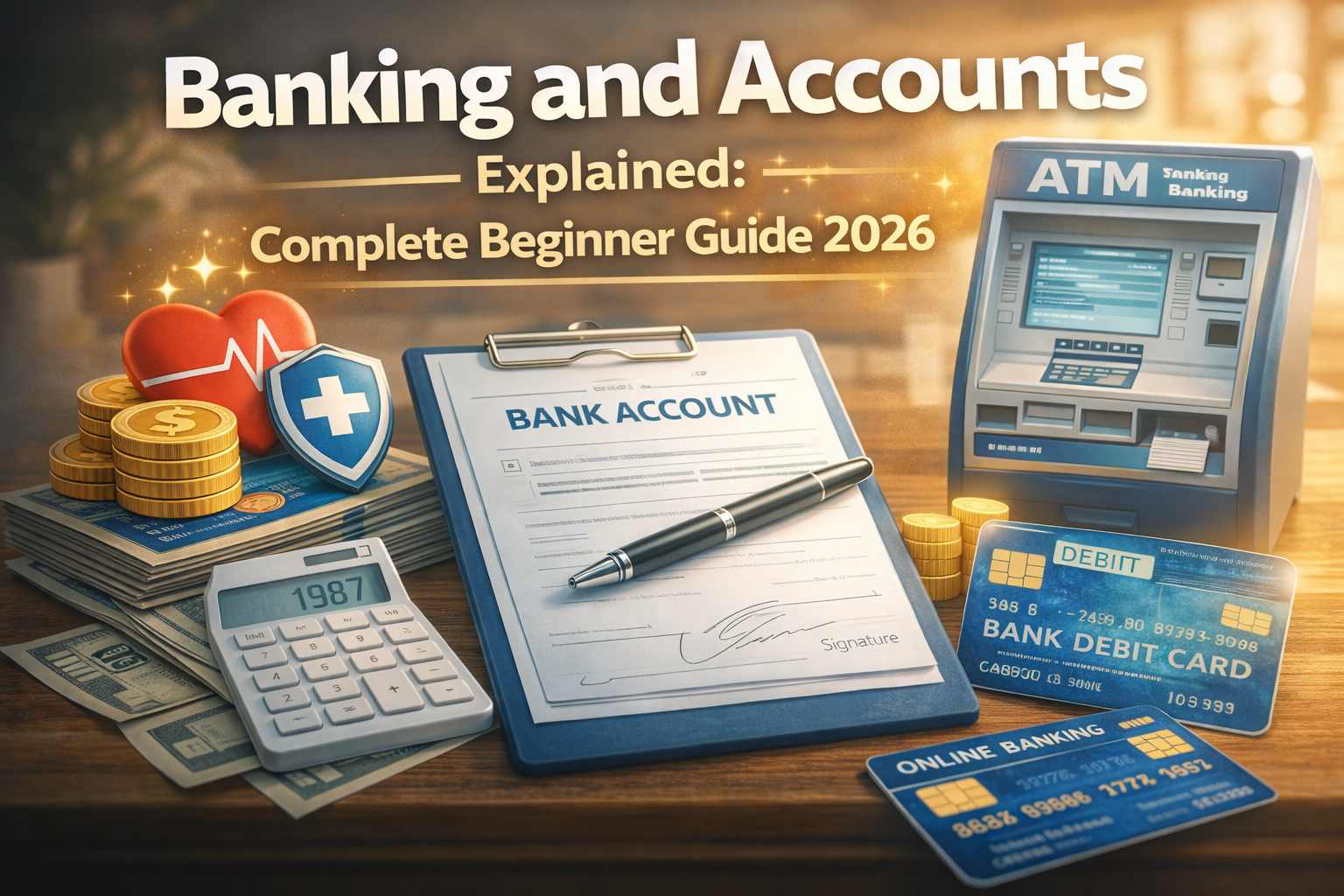
Banking and accounts are part of our daily life, yet many people use banks without truly understanding how they work. I’ve personally seen people open bank accounts just because someone told them to, without knowing the difference between a savings account and a current account, or how ATM and debit cards actually function.
In my opinion, banking should never feel confusing or stressful. Once you understand the basics of banking and accounts, managing money becomes easier, smarter, and much safer. This article is written like a human conversation—not textbook language—so you can finally feel confident about your banking decisions.
What Is Banking and Why It Matters
Banking is a system that allows people to store money securely, transfer funds, make payments, and track finances. Instead of keeping cash at home, banks provide safety, convenience, and structure.
In my opinion, banking matters because it gives you control over your money. Without banking and accounts, paying bills, receiving salaries, shopping online, or saving for the future becomes difficult.
Benefits of Banking and Accounts
-
Safe storage of money
-
Easy access through ATM and debit cards
-
Online banking convenience
-
Financial records and statements
-
Support for savings and growth
Understanding Bank Accounts (The Foundation of Banking)
A bank account is where your money lives digitally. It allows you to deposit, withdraw, and manage funds according to your needs.
From my experience, choosing the right type of bank account is more important than choosing a popular bank. Many people face issues simply because they don’t understand what type of account they opened.
Types of Bank Accounts Explained
1. Savings Account
A savings account is designed to help you save money while earning small interest.
Best for:
-
Students
-
Beginners
-
Emergency savings
In my opinion, everyone should start with a savings account. Even saving a small amount regularly builds discipline and financial confidence.
2. Current (Checking) Account
A current account is mainly used for frequent transactions and usually does not earn interest.
Best for:
-
Salaried individuals
-
Business owners
-
Freelancers
My personal feeling is that current accounts are practical, especially when you handle regular payments and receipts.
3. Fixed Deposit Account
This account locks your money for a specific period and offers higher interest.
Best for:
-
Long-term savers
-
People who don’t need instant access to money
In my opinion, fixed deposits are great for people who want safe and predictable returns.
4. Joint Account
A joint account is shared by two or more people.
Best for:
-
Couples
-
Families
-
Shared household expenses
Trust is key here. When used correctly, joint accounts simplify shared finances.
ATM Cards: Easy Access to Your Money
ATM (Automated Teller Machine) cards allow you to withdraw cash anytime.
What You Can Do with an ATM Card
-
Withdraw cash
-
Check account balance
-
Deposit money (in some machines)
-
Transfer funds
From my experience, ATMs provide freedom. But protecting your PIN is extremely important.
Debit Cards Explained (Beyond Cash Withdrawal)
Debit cards are directly linked to your bank account. Whenever you use a debit card, money is deducted instantly.
Uses of Debit Cards
-
Shopping online
-
Paying bills
-
Store purchases
-
ATM withdrawals
In my opinion, debit cards help control spending because you can only spend what you have.
ATM Card vs Debit Card
| Feature | ATM Card | Debit Card |
|---|---|---|
| Cash withdrawal | Yes | Yes |
| Online payments | No | Yes |
| Linked to bank account | Yes | Yes |
| Spending control | High | High |
Most modern cards work as both ATM and debit cards.
Online Banking: Modern Banking Made Simple
Online banking allows you to manage your bank account using the internet.
What Online Banking Offers
-
Balance checks
-
Money transfers
-
Bill payments
-
Statement downloads
-
Card management
In my opinion, online banking is one of the best things to happen to banking and accounts. It saves time and reduces dependency on physical branches.
Mobile Banking Apps (My Favorite Banking Tool)
Mobile banking apps bring the bank into your pocket.
Advantages:
-
24/7 access
-
Fast transactions
-
Expense tracking
Personally, I feel more in control of my money when I can see every transaction instantly.
How to Open a Bank Account (Step by Step)
Opening a bank account is easier than most people think.
Steps:
-
Choose a reliable bank
-
Select account type
-
Provide ID and address proof
-
Complete verification
-
Receive debit/ATM card
In my opinion, asking questions at the bank saves future problems.
Common Banking Fees You Should Know
Many people lose money because they don’t understand fees.
Common Charges:
-
Minimum balance penalty
-
ATM withdrawal limits
-
Card replacement fee
Always read terms carefully. Banking and accounts work best when you understand the rules.
Banking Safety Tips (Very Important)
Based on real experience:
-
Never share OTP or PIN
-
Avoid public Wi-Fi for banking
-
Check statements regularly
-
Report lost cards immediately
In my opinion, awareness is the best protection against fraud.
My Personal Opinion on Banking and Accounts
Banking is not just about money—it’s about confidence and independence. When you understand banking and accounts, you stop fearing financial decisions. You start planning, saving, and growing with clarity.
I truly believe basic banking knowledge should be taught early in life. It prevents mistakes and builds a secure future.
Everything will be digital today so you will need to have a bank account must. It is very important according to all point of view.
With the help of bank account every thing will be easy and you don’t care about your financial condition and you clearly focus on saving and investment.
Bank accounts will helpful in every field of Life.
This is my final openion on bank accounts.
Conclusion
Banking and accounts are powerful tools when used correctly. From choosing the right bank account to using ATM machines, debit cards, and online banking, everything plays a role in your financial life.
In my opinion, the goal of banking is simple: control your money instead of letting money control you. Once you understand how banking works, you feel more confident, secure, and prepared for the future.
Frequently Asked Questions (FAQs)
What is banking and accounts?
Banking and accounts refer to systems that allow people to store, manage, and use money safely through banks.
Which bank account is best for beginners?
In my opinion, a savings account is best for beginners due to simplicity and interest benefits.
Is online banking safe?
Yes, online banking is safe if you follow security practices like strong passwords and avoiding public Wi-Fi.
What is the difference between debit card and ATM card?
A debit card allows shopping and payments, while an ATM card is mainly for cash withdrawals. Most cards today combine both features.
Why is understanding banking important?
Understanding banking helps you avoid fees, protect money, and make better financial decisions.