
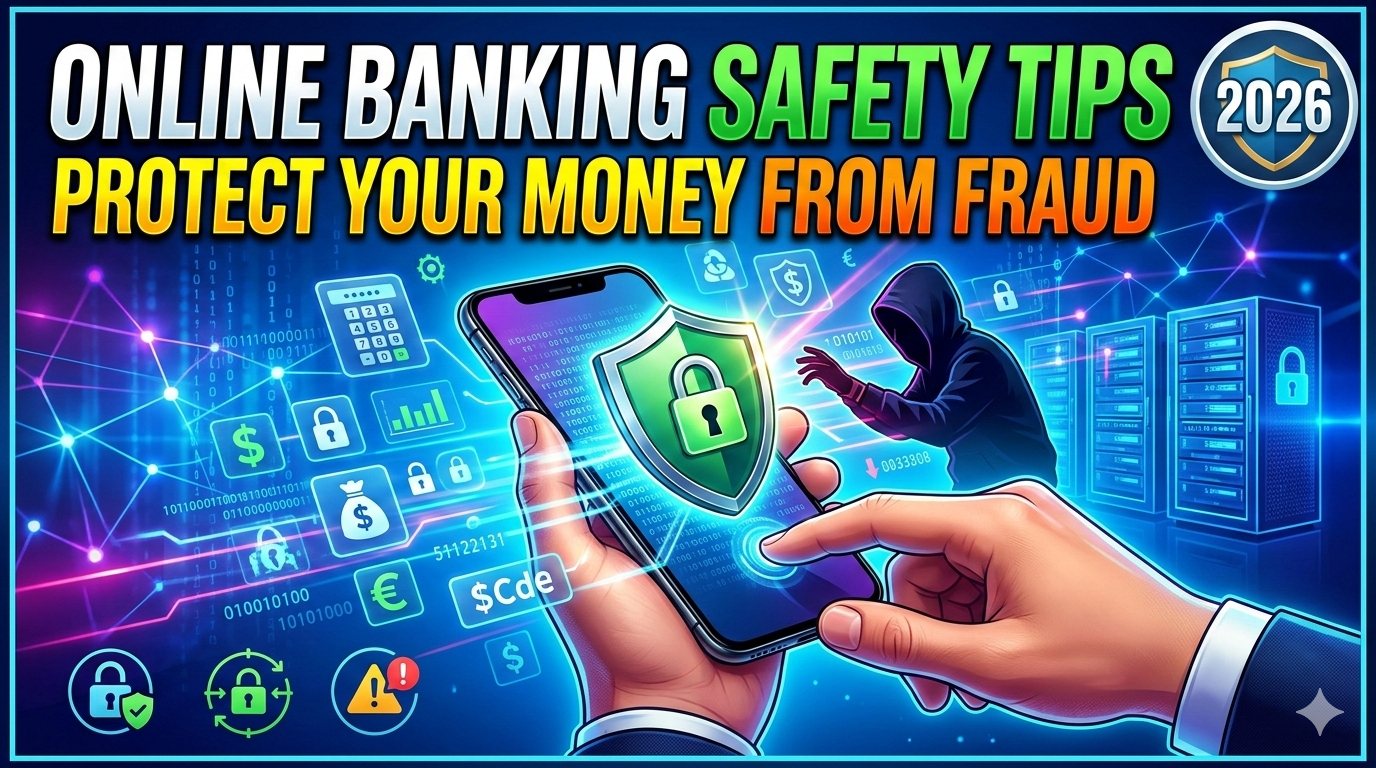
Online Banking Safety Tips 2026
Introduction
With online banking becoming more popular in 2026 lots of people are managing their money on the internet. Online banking is convenient. You can transfer money. Pay bills easily.. It also comes with risks. Online banking fraud is on the rise and scammers are always coming up with ways to steal money.
In this guide we’ll share some tips to help you stay safe while banking online. You’ll learn about scams, secure practices and expert strategies to keep your accounts safe. By following these tips you can use banking with confidence and not worry about losing your hard-earned money.
1. Understand Online Banking Risks
Before we dive into safety tips it’s essential to know the types of risks you might face:
Common Online Banking Fraud Types
Phishing:
Emails or messages that trick you into giving away your account details.
Malware and Viruses:
Software that can steal info from your devices.
Unauthorized Access:
Hackers trying to access your account with passwords or insecure networks.
Fake Banking Apps: Scam apps that look like your banks app.
My Opinion: Knowing these risks is the step to staying safe online. Being aware can prevent 70-80% of scams.
2. Use Strong Unique Passwords
password is your first line of defense against fraud.
Tips for Strong Passwords:
Use at 12 characters, including letters, numbers and symbols.
Don’t use guessable passwords like your birthday or “123456.”
Never reuse passwords across accounts.
Consider using a password manager to store passwords securely.
Tip:
Change your password every 3-6 months to stay safe.
3. Enable Two-Factor Authentication (2FA)
Two-Factor Authentication adds a layer of security. Even if a hacker gets your password they won’t access your account without the verification step.
How to Use 2FA:
Enable SMS or email verification.
Use authentication apps like Google Authenticator or Authy.
Avoid relying on SMS- verification if possible as SIM swapping attacks are increasing
Tip:
Always enable 2FA on all banking and financial apps.
4. Keep Your Devices Secure
Your computer, tablet or smartphone must be protected from threats.
Safety Measures
Install antivirus software.
Keep your operating system and apps updated.
Avoid downloading apps from sources.
Use device encryption to protect stored data.
My Experience:
I once used a smartphone for banking without updates and almost got scammed. Updating the system and adding antivirus stopped it immediately.
5. Beware of Public Wi-Fi
Public Wi-Fi networks are convenient. They are often insecure. Hackers can intercept your data if you log in to banking over public Wi-Fi.
Tips for Safe Banking on Wi-Fi:
Avoid logging in on public networks.
Use a VPN (Virtual Private Network) for encrypted connections.
Prefer data for banking if Wi-Fi security is uncertain.
6. Regularly Monitor Your Accounts
Frequent monitoring helps detect fraud
Monitoring Tips:
Check your account balances daily.
Review all transactions for activity.
Set up account alerts via SMS or email for every transaction.
Report activity immediately to your bank.
Tip:
Early detection reduces the chances of losing a lot of money.
7. Recognize Phishing Attempts
Phishing remains the common online banking scam. Scammers often impersonate your bank. Request sensitive information.
How to Spot Phishing:
Check the senders email address
Avoid clicking links in emails or SMS messages.
Never share passwords, OTPs or PINs onli
Verify with your bank using contact channels.
My Tip:
Always type your banks URL manually of clicking links.
8. Avoid Sharing Sensitive Information
Sharing your banking details on media or unsecured websites is extremely risky.
Examples to Avoid:
Posting account numbers, credit card info or passwords.
Sharing OTPs or verification codes with anyone, friends.
Using forums to discuss banking login details.
Fact: Many frauds happen because users inadvertently share data.
9. Use Official Banking Apps Only
Scam banking apps mimic apps to steal your credentials.
Tips:
Download apps only from official app stores (Google Play, Apple Store).
Check developer. Reviews before installing.
Avoid APK. Third-party downloads.
10. Keep Software Updated
Banks regularly update their apps to fix security vulnerabilities. Using versions may expose you to fraud.
Tips:
Enable automatic app updates.
Update your device operating system promptly.
Check the banks website for security announcements.
11. Set Transaction Limits
Many banks allow setting per-transaction limits. This limits your loss if fraud occurs.
Tips:
Set a realistic daily transfer limit.
Avoid linking all your accounts to a banking app.
Consider creating a separate account for online purchases with limited funds.
12. My Personal Experience
I once got a phishing SMS claiming my account was blocked. Thanks to my 2FA and awareness I avoided sharing any OTPs. Reported it immediately. Months later I heard about someone losing $5,000 due to phishing. Staying proactive is crucial for protecting your money
13. FAQs About Online Banking Safety
Q1: Can I bank safely using my smartphone?
Yes long as your device is secure updated and you follow safety practices.
Q2: What should I do if I suspect fraud?
Immediately contact your bank change your passwords and report the incident to authorities if necessary.
Q3: Are banking apps safe?
Official banking apps are safe but avoid third-party apps or unofficial downloads.
Q4: How often should I check my account?
Daily or at a few times a week especially if you conduct frequent transactions.
Q5: Can VPN protect my banking transactions?
Yes, VPN encrypts your connection and protects data on networks. Online Banking Safety Tips
14. Conclusion
Online banking is convenient. It comes with risks. By following these banking safety tips you can protect your money from fraud and cybercriminals. Strong passwords, 2FA monitoring accounts using apps avoiding public Wi-Fi and staying alert are the most effective strategies in 2026. Online Banking Safety Tips
PRO Tip:
Combining multiple safety measures provides maximum protection. Treat your banking credentials, like gold—never share them stay updated and act fast if you detect suspicious activity.
NOTE
Note: The information provided in this article is for educational purposes only. It should not be considered financial or investment advice. Always do your own research and consult a qualified financial professional before making any investment decisions.