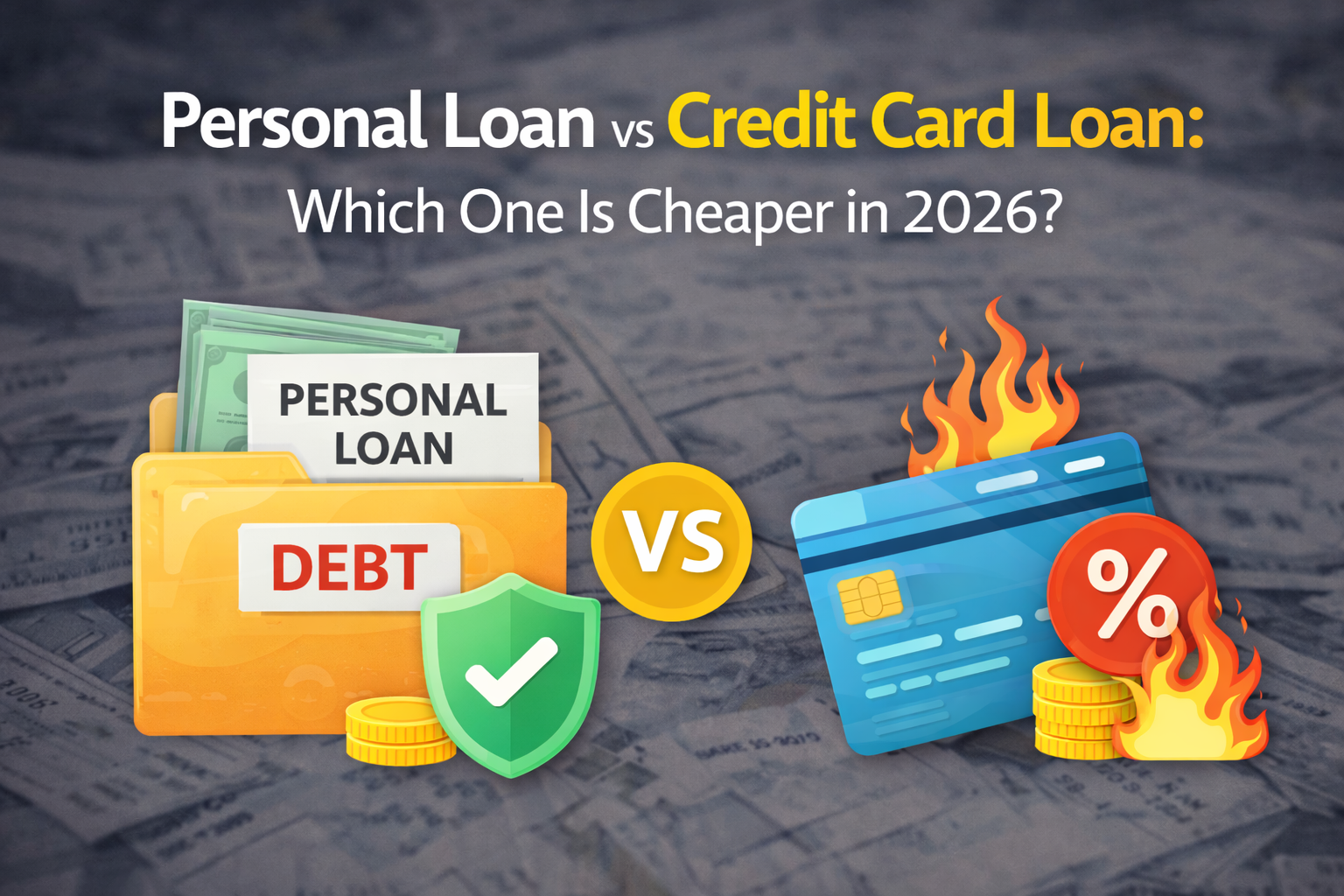
Personal Loan VS Credit Card Loan: Which One is Cheaper in 2026?
Introduction
Borrowing money is very common these days. People borrow money for emergencies, travel, education or managing unexpected expenses.
Two popular borrowing options are loans and credit card loans. Both options provide access to funds but they work differently when it comes to interest rates, repayment terms and total cost.
Many people ask which one is cheaper: Personal Loan or Credit Card Loan.
The answer depends on factors such as interest rates, loan amount, repayment period and spending habits.
Understanding these differences can help you choose the cost-effective option and avoid unnecessary debt.
In this guide we will explore the Personal Loan vs Credit Card Loan comparison explain how each option works and help you decide which one saves money.
What Is a Personal Loan?
A personal loan is a loan provided by banks, financial institutions or online lenders.
It allows you to borrow a fixed amount of money and repay it in monthly installments over a set period.
Typical features of a loan include:
• Fixed interest rate
• Fixed repayment period
• Equal monthly payments
• Lump sum money received at once
In 2026 personal loan interest rates usually range between 10% and 18% annually depending on the borrower’s credit score and lender policies.
Personal loans are commonly used for:
• emergencies
• Wedding expenses
• Home renovation
• Travel costs
• Debt consolidation
Because the interest rate is usually lower than credit card interest personal loans are often considered a cheaper borrowing option for large expenses.
What Is a Credit Card Loan?
A credit card loan refers to borrowing money through a credit card balance.
When you use a credit card and do not pay the balance by the due date the remaining amount becomes a loan.
Credit card borrowing works differently from loans.
Of fixed installments credit cards allow flexible repayment with a minimum payment option each month.
Typical features include:
• Revolving credit limit
• Minimum payment
• High interest rates
• Interest calculated on remaining balance
In 2026 credit card interest rates can range between 24% and 45% annually making them one of the expensive borrowing options.
However credit cards also offer an interest- period of around 30–45 days if the full balance is paid on time.
Personal Loan vs Credit Card Loan: Key Differences
Understanding the Personal Loan vs Credit Card Loan comparison requires looking at important factors.
1. Interest Rates
Interest rate is the factor that determines which loan is cheaper.
Personal Loan
• Interest rate: 10%–18% per year
Credit Card Loan
• Interest rate: 24%–45% per year
Because credit card interest rates are significantly higher borrowing through a credit card becomes more expensive over time.
2. Repayment Structure
Personal loans follow a fixed repayment schedule.
You know exactly:
How much to pay each month
• How long the loan will last
• Total interest cost
Credit cards are flexible but risky.
You can:
• Pay the amount
• Pay part of the balance
• Pay only the minimum payment
Minimum payments can trap users in long-term debt.
3. Borrowing Limits
Personal loans allow borrowing amounts.
Typical personal loan range:
• $1,000 to $50,000 or more
Credit card borrowing is limited by your credit limit, which may be much smaller.
4. Loan Tenure
Personal loan repayment periods are usually 1 to 5 years.
Credit card debt does not have a fixed repayment deadline.
If you only pay payments the debt could last many years.
5. Fees and Charges
Personal loans often include:
• Processing fee
• early repayment charges
Credit cards may include:
• Annual fees
• Late payment penalties
• Cash advance fees
Both options have costs but interest remains the biggest factor.
Cost Comparison Example
Let’s compare borrowing $10,000 using both options.
Personal Loan Example
Loan amount: $10,000
Interest rate: 14%
Tenure: 3 years
Total interest paid: $2,300
Credit Card Loan Example
Credit card balance: $10,000
Interest rate: 25%
Total interest over time could exceed $4,000 or more depending on repayment speed.
When a Personal Loan Is Cheaper
In situations personal loans are cheaper than credit card loans especially when:
• Borrowing a large amount
• Repaying over many months
• Consolidating existing credit card debt
For example converting multiple credit card balances into a loan can significantly reduce interest payments.
Many financial experts recommend loans for expenses above $5,000 because credit card interest becomes very expensive.
When a Credit Card Loan Can Be Cheaper
Although credit cards are expensive they can sometimes be cheaper in situations.
1. Short-Term Borrowing
If you repay the balance during the interest- period you pay zero interest.
2. Small Purchases
For expenses under $500 or $1,000 applying for a personal loan may not be necessary.
3. Promotional Offers
Some credit cards offer 0% interest for 6–18 months.
If the balance is paid before the promotion ends the cost may be lower than a loan.
Pros and Cons of Personal Loans
Pros
• Lower interest rates
• Fixed repayment schedule
• Larger borrowing limits
• Predictable monthly payments
Cons
• Processing fees
• credit inquiry required
• Less flexible than credit cards
Pros and Cons of Credit Card Loans
Pros
• Instant access to funds
• No loan application required
• Interest-free period available
• Useful for emergencies
Cons
• High interest rates
• Minimum payment trap risk
• Debt can last many years
• Easy overspending
My Personal Opinion
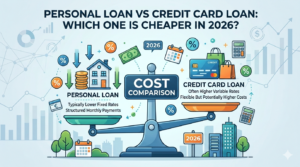
In my opinion the Personal Loan vs Credit Card Loan decision mostly depends on repayment discipline.
If someone is financially disciplined and pays their credit card balance every month a credit card can be an cost-effective financial tool.
However for people who cannot repay the balance quickly credit card debt becomes extremely expensive.
Because personal loans offer interest rates and structured repayment plans they are usually the safer and cheaper option for borrowing money.
Conclusion
Choosing between Personal Loan vs Credit Card Loan in 2026 depends on how money you need and how quickly you can repay it.
Personal loans are generally cheaper because they offer interest rates and predictable monthly payments.
They are ideal for expenses and long-term borrowing.
Credit cards on the hand are better suited for short-term spending when the balance can be repaid during the interest-free period.
Before choosing any borrowing option always compare interest rates, fees and repayment terms carefully.
Making the right choice can save you thousands of dollars in interest and protect your future.
FAQs
1. Which is cheaper: loan or credit card loan?
In cases personal loans are cheaper because their interest rates are significantly lower than credit card interest rates.
2. Can I pay off credit card debt with a loan?
Yes. Many people use loans to consolidate credit card debt because it reduces interest payments.
3. Are credit cards cheaper for short-term borrowing?
Yes. If the balance is paid within the interest- period credit cards can be cheaper than personal loans.
4. What is the average personal loan interest rate in 2026?
Personal loan interest rates usually range, between 10% and 18% annually depending on credit score and lender policies.
5. Why are credit card loans expensive?
Credit cards charge higher interest rates and compound interest on outstanding balances, which increases the total cost of borrowing.