
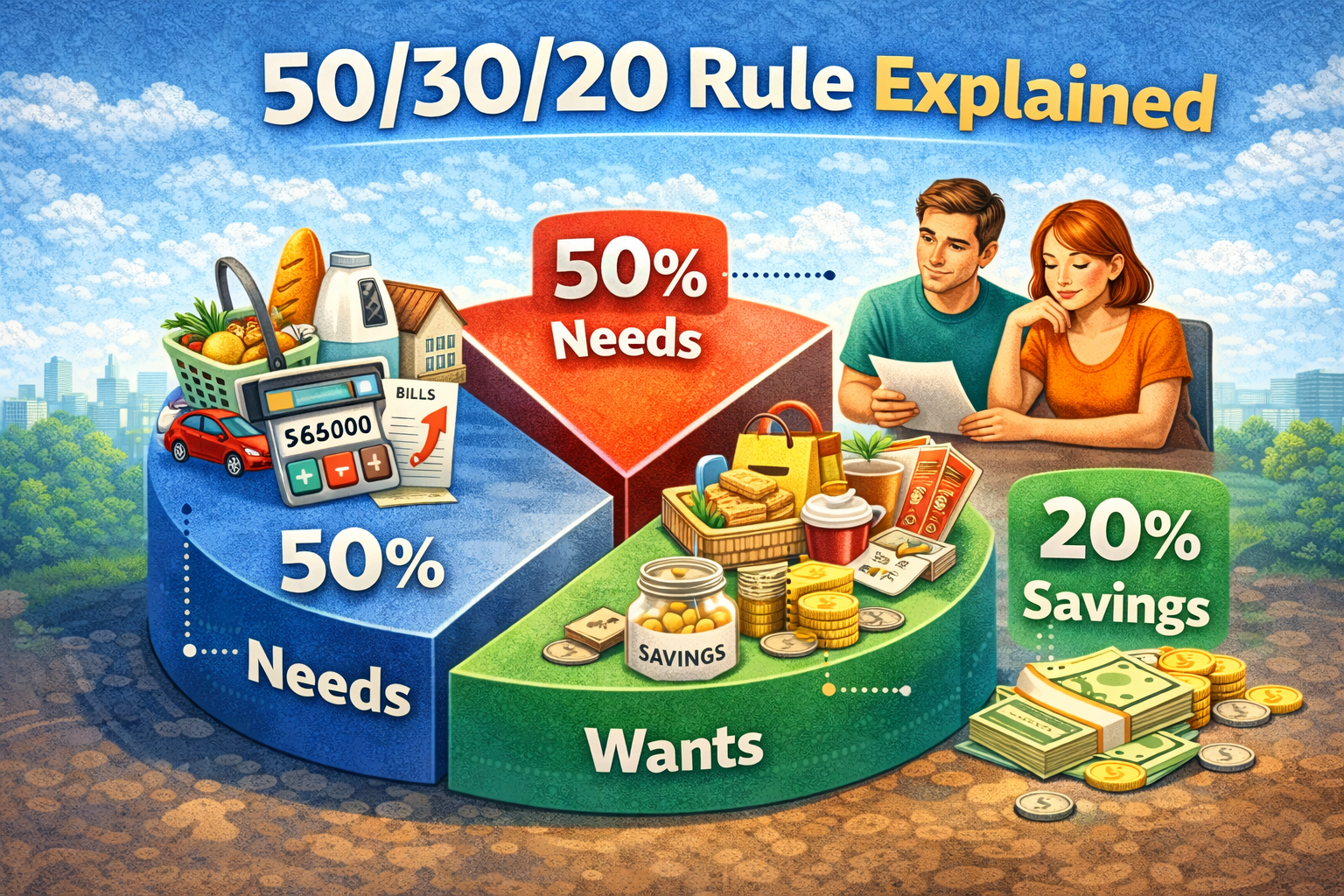
50/30/20 Rule Explained: Is It Still the Best Budgeting Method in 2026?
Introduction
Budgeting advice is everywhere.
Scroll social media and you’ll see different money strategies. Watch finance videos and every expert recommends a different system. Some say zero-based budgeting is best. Others say envelope budgeting works better.
But one method that has survived for years is the 50/30/20 rule.
So today, let’s do a complete 50/30/20 Rule Explained guide and answer the big question:
Is it still the best budgeting method in 2026?
In my opinion, budgeting should be simple, realistic, and sustainable. If a budgeting method feels stressful or complicated, most people quit within weeks. That’s why the 50/30/20 rule became popular — it’s easy to understand.
But does it still work in 2026 with rising inflation, high rent, and increasing living costs?
Let’s break it down honestly.
What Is the 50/30/20 Rule?
Before deciding if it’s the best budgeting method in 2026, let’s first do a proper 50/30/20 Rule Explained breakdown.
The rule divides your after-tax income into three simple categories:
-
50% for Needs
-
30% for Wants
-
20% for Savings and Investments
That’s it.
No complex spreadsheets.
No 25 categories.
No daily tracking stress.
Just three clear buckets.
50% – Needs (Essential Expenses)
Needs are things you must pay to survive and function.
Examples include:
-
Rent or mortgage
-
Utilities
-
Groceries
-
Transportation
-
Insurance
-
Minimum loan payments
-
Basic healthcare
In theory, your essential expenses should not exceed 50% of your income.
But here’s where reality hits in 2026…
In many cities, rent alone can take 40–50% of income.
This is one major reason people question whether the 50/30/20 rule is still practical.
30% – Wants (Lifestyle Spending)
Wants are not essential, but they improve quality of life.
Examples:
-
Eating out
-
Streaming subscriptions
-
Shopping
-
Travel
-
Entertainment
-
Upgraded gadgets
The 30% category is important.
In my opinion, this is what makes the 50/30/20 rule sustainable. Because it allows enjoyment. It doesn’t feel like punishment.
A budget that removes all fun usually fails.
20% – Savings and Investments
This is the wealth-building part.
The 20% category includes:
-
Emergency fund
-
Retirement savings
-
Stock investments
-
Mutual funds
-
Real estate investments
-
Extra loan repayments
This is the most powerful section of the rule.
Because no matter how much you earn, if you don’t save at least 20%, wealth becomes difficult.
Why the 50/30/20 Rule Became So Popular
Now that we’ve done the basic 50/30/20 Rule Explained, let’s understand why it became so popular.
-
It’s simple
-
It’s beginner-friendly
-
It balances spending and saving
-
It doesn’t require complex tracking
-
It prevents extreme budgeting
In my personal experience, simplicity wins. Most people don’t fail because budgeting is hard. They fail because budgeting is complicated.
The 50/30/20 rule removes complexity.
Is the 50/30/20 Rule Still the Best Budgeting Method in 2026?
Now comes the real question.
In 2026, with inflation rising and living costs increasing, is this still the best budgeting method?
The honest answer:
It depends on your income and location.
Let’s look at both sides.
Pros of the 50/30/20 Rule
1. Extremely Simple
The biggest advantage of the 50/30/20 rule explained clearly is simplicity.
You don’t need finance knowledge.
You don’t need accounting skills.
You just divide income into three parts.
This makes it perfect for beginners.
2. Prevents Overspending
When you limit wants to 30%, lifestyle inflation becomes controlled.
Without structure, wants can easily grow to 50–60%.
The 50/30/20 method prevents that.
3. Encourages Automatic Saving
The 20% savings rule forces you to prioritize your future.
In my opinion, this alone makes it powerful.
Even if you follow no other strategy, saving 20% consistently can change your financial life.
4. Balanced Lifestyle
Unlike extreme budgeting systems, this rule allows enjoyment.
That’s why it works in real life.
5. Flexible Framework
Many people adjust it slightly:
-
60/30/10
-
50/20/30
-
70/20/10
The core idea remains the same:
Balance spending and saving.
Cons of the 50/30/20 Rule
Now let’s be honest about limitations.
1. Hard in Expensive Cities
In 2026, housing costs are high.
In many areas:
Rent = 50% of income alone.
That leaves no room for utilities and groceries.
This makes the rule difficult for low and middle-income earners.
2. Ignores Debt Situations
If someone has heavy debt, 20% savings might not be realistic.
They may need:
-
30–40% toward debt repayment.
The rule doesn’t adjust for personal financial crises.
3. Doesn’t Track Detailed Spending
Some people need strict tracking.
The 50/30/20 rule is broad.
It doesn’t control micro-expenses.
For overspenders, this might not be enough.
My Personal Opinion: Is the 50/30/20 Rule Still Worth It in 2026?
In my honest opinion, the 50/30/20 rule explained in simple terms is still one of the best starting points for beginners in 2026.
But here’s the truth most people won’t tell you:
It is not perfect for everyone.
When I first tried the 50/30/20 budgeting method, I realized something important — my “needs” were already more than 50%. Rent, groceries, transport, and bills were taking almost 65% of my income.
At that moment, I thought the method was unrealistic.
But later, I understood something powerful:
The 50/30/20 rule is not a strict law. It is a framework.
Instead of quitting, I adjusted it to:
60% Needs
20% Wants
20% Savings
And it worked.
The biggest benefit for me was awareness. Before using this budgeting method, I never knew exactly where my money was going. After applying the 50/30/20 rule, I started noticing unnecessary spending habits.
In my experience, the rule works best when:
You treat it as guidance, not a fixed formula
You adjust percentages based on your income
You stay consistent for at least 3–6 months
So is it still the best budgeting method in 2026?
For beginners — yes.
For high earners — absolutely.
For people struggling with high living costs — it needs modification.
How to Make the 50/30/20 Rule Work in 2026
If traditional 50/30/20 doesn’t fit your situation, try these smarter adjustments:
1. Reverse the Rule (Pay Yourself First)
Instead of spending first, save 20% immediately when salary arrives.
Then divide the rest into needs and wants.
This small change makes a big difference.
2. Use 50/30/20 as a Long-Term Goal
If currently your needs are 70%, don’t panic.
Gradually reduce unnecessary expenses and move toward the 50% target over time.
3. Increase Savings When Income Increases
One major mistake in 2026 is lifestyle inflation.
When income increases:
Don’t increase wants.
Increase savings percentage.
This is how middle-class families build wealth.
Who Should Use the 50/30/20 Rule in 2026?
This budgeting method is ideal for:
Young professionals
Beginners in personal finance
People who hate complicated budgeting
Families wanting balanced spending
Anyone building long-term wealth
It may not be ideal for:
People with heavy debt
People living in extremely high-cost cities
Irregular income earners
Final Conclusion: Is the 50/30/20 Rule Still the Best Budgeting Method in 2026?
After fully explaining the 50/30/20 rule and analyzing its pros and cons, here’s the honest conclusion:
Yes, the 50/30/20 rule is still one of the best budgeting methods in 2026 — but only if you adapt it to your situation.
The power of this budgeting rule is not in the exact numbers.
The power is in balance.
It teaches:
Control your essential expenses
Enjoy your life responsibly
Save consistently for the future
In 2026, financial stress is rising. Inflation is high. Living costs are increasing. That’s exactly why structured budgeting matters more than ever.
If you are confused about money management, start with the 50/30/20 rule.
Adjust it.
Improve it.
But don’t ignore budgeting completely.
Because no budgeting method works better than having no plan at all.
Frequently Asked Questions (FAQs)
1. What is the 50/30/20 rule explained in simple words?
The 50/30/20 rule is a budgeting method where you divide your after-tax income into 50% needs, 30% wants, and 20% savings or investments.
2. Is the 50/30/20 rule realistic in 2026?
It can be challenging in high-cost cities, but it works well if adjusted based on income and living expenses.
3. Can I change the 50/30/20 percentages?
Yes. Many people use 60/20/20 or 70/20/10 depending on their financial situation. The idea is balance, not strict numbers.
4. Is 20% savings enough in 2026?
For beginners, 20% is a strong starting point. If possible, increasing savings beyond 20% can accelerate wealth building.
5. Does the 50/30/20 rule help build wealth?
Yes, if followed consistently. Saving and investing at least 20% over time can significantly grow wealth.
6. Is the 50/30/20 rule better than zero-based budgeting?
It depends on personality. The 50/30/20 rule is simpler and less stressful. Zero-based budgeting is stricter and more detailed.